
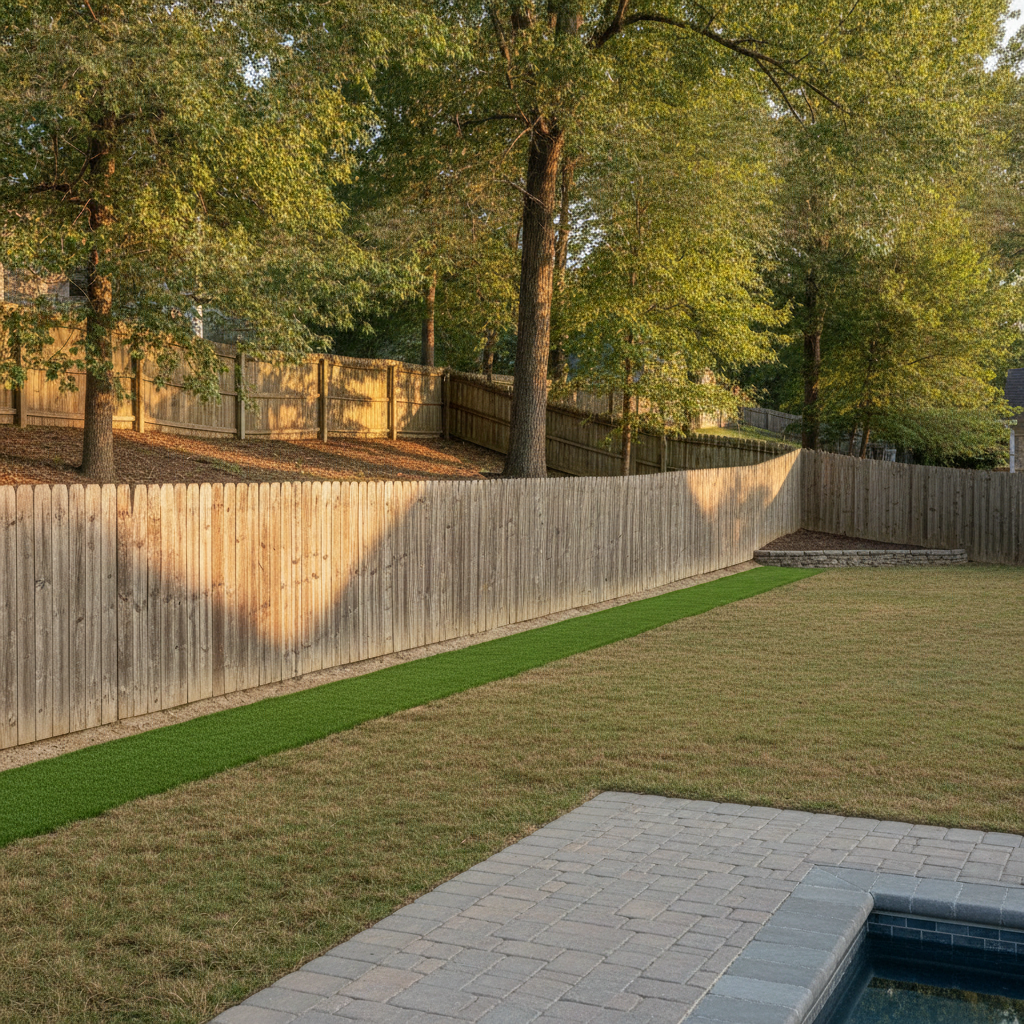
How Do You Install Artificial Turf on a Fence Line or Property Border in Fredericksburg, VA? What Homeowners Need to Know About Edge Zones
Yes — you can absolutely install artificial turf along a fence line or property border in Fredericksburg, VA, and it’s one of the smartest turf applications most homeowners overlook. That narrow three-foot strip running the length of your fence is usually a mud trap in spring, a dust bowl in August, and a weed magnet year-round. Artificial turf solves all of that permanently. But installing it correctly in an edge zone requires different techniques than an open backyard installation. The margins are tighter, drainage is more critical, and the anchoring system has to be built right or you’ll see lifting and edge curl within a season. Here’s what you need to know before calling any installer.
Why Fence Lines and Property Borders Are So Difficult to Maintain in Fredericksburg
Fredericksburg and the surrounding Stafford County area get significant spring rainfall — often 3 to 4 inches in a single week during March and April. That water has to go somewhere, and fence lines are almost always the lowest collection point in a yard. Combine that with partial or full shade from a fence structure blocking afternoon sun, compacted clay-heavy soil that’s common throughout this part of Virginia, and foot traffic from kids and pets running the perimeter, and you’ve got a zone that’s almost impossible to keep green with natural grass.
Most homeowners in Fredericksburg either tolerate it or throw down mulch that migrates into the yard every time it rains. Artificial turf is the right long-term fix — but only if the installation is done with the drainage and edge anchoring that a narrow zone actually demands.
What Makes Fence Line Turf Installations Different from a Standard Backyard
An open backyard installation gives you room to work, room to roll out full turf widths, and usually some flexibility in how you orient the seams and manage water flow. A fence line strip doesn’t give you any of that. Here’s what changes:
- Base width constraints: Most fence line zones are between 18 inches and 5 feet wide. That changes how you excavate, compact, and grade for drainage — you can’t use standard compaction equipment in a 2-foot corridor without specialized plate tampers.
- Drainage direction is critical: Water must flow away from the fence post base and away from the home’s foundation. A poorly graded edge zone can actually direct water toward your house if the base isn’t properly pitched.
- Turf anchoring at the fence line: The edge closest to the fence needs a solid bender board or aluminum edging system secured into the compacted base — not just nailed into soft soil. Fence vibration from wind, kids, and pets will work turf edges loose over time if anchoring is done cheaply.
- Seam placement: Depending on your strip width, you may need to run turf lengthwise with no seams at all, or you may need a single seam running the length of the border. Either way, the seam has to be placed so it’s not sitting in a low spot where water collects.
- Access for installation equipment: Many Fredericksburg homes have wooden privacy fences with gates that are 36 to 48 inches wide. If equipment can’t get through the gate, crews have to hand-carry base material down the corridor — which adds labor time and is a legitimate question to ask any installer upfront.
The Right Base Prep for a Narrow Edge Zone
Here’s where most budget installers cut corners, and where the long-term performance of your fence line turf either holds up or fails. For a proper edge zone installation in Fredericksburg’s clay-heavy soil, the base process should look like this:
- Excavate 3 to 4 inches of existing soil, removing all organic material, roots, and vegetation.
- Install a weed barrier membrane across the entire excavated zone. Fabric quality matters here — thin geotextile fabric breaks down faster and lets weed root systems push through within 2 to 3 years.
- Fill with crushed aggregate base (typically Class II road base or crushed stone), compacted in lifts to achieve a firm, stable substrate. For narrow zones, a hand-operated plate compactor is the right tool.
- Grade the base so water drains away from the fence posts and toward the yard, not back toward the foundation.
- Install perforated drain pipe if the strip is in a known low-collection zone — this is common in Fredericksburg properties where grade runs toward the back fence line.
Skipping any of these steps — especially proper compaction in a narrow strip — results in base settling, edge curl, and turf surface unevenness within the first freeze-thaw cycle. Northern Virginia winters are mild but unpredictable, and the freeze-thaw cycles from November through February will absolutely stress a poorly compacted base.
The Competitor Content Gap: Edge Zone and Fence Line Installations
After reviewing the major synthetic turf installers serving this region, one thing stands out: none of them say anything meaningful about fence line or property border installations as a distinct installation category. Most competitor sites focus almost entirely on full backyard installs, pet runs, or commercial fields. There’s no guidance for homeowners with the very common problem of a narrow, unusable border strip running the perimeter of their yard — despite the fact that this is one of the top complaints we hear from homeowners across Fredericksburg, Stafford, and Northern Virginia.
That gap matters because fence line turf isn’t just a smaller version of a full backyard install. It’s technically more demanding, and homeowners who hire general landscapers or franchise turf companies without this specific experience often end up with lifted edges, pooling water along the fence post bases, and turf that looks sloppy within a year.
If you’re also looking at turf options for the main lawn area, our residential lawn turf page covers pile height options, UV-stabilized fiber systems, and what a full-yard installation involves from excavation through final brushing.
Choosing the Right Turf Product for a Fence Line
Not every turf product is appropriate for a narrow edge zone. Here’s what to prioritize:
- Pile height: For fence line strips, a 30mm to 38mm pile height usually looks best and is easier to maintain in tight spaces. Taller 50mm fibers can look overdone in a narrow zone and may lay unevenly close to the fence structure.
- Blade shape and density: A C-shaped or S-shaped fiber holds its shape better under foot traffic along a perimeter path. Flat fibers flatten faster in high-traffic corridors.
- Drainage backing: Even for a non-pet zone, choose a turf with a perforated backing rated for adequate drainage. Fredericksburg springs will test any product’s drainage capacity — 30+ inches of rainfall per hour from a summer thunderstorm shouldn’t back up into your fence line strip.
- UV stabilization: A south-facing fence line in summer gets direct sun for most of the day. UV-stabilized fibers resist color fade and fiber breakdown from prolonged sun exposure.
If pets use the fence line — which is extremely common since dogs patrol perimeters — the drainage requirements jump significantly. You’d want a dedicated pet-friendly turf system with a 5-layer drainage design, zeolite deodorizer layer, and antimicrobial infill. Odor control in a narrow, partially enclosed fence line zone is harder to manage without the right drainage architecture underneath.
HOA Considerations for Fence Line Turf in Fredericksburg and Stafford
Many newer subdivisions in Fredericksburg and Stafford County are HOA-governed, and architectural review requirements vary significantly from one community to the next. Before any installation begins, you’ll want to:
- Pull your HOA’s Architectural Control Committee (ACC) guidelines and look specifically for language around synthetic turf, artificial grass, or landscaping materials along fences and property lines.
- Check whether your HOA requires neighbor notification when work is being done within a certain distance of shared fence lines.
- Confirm that the edging and border treatment visible from common areas or neighboring lots meets your HOA’s aesthetic standards. Some HOAs require natural-looking transitions between turf and existing landscaping.
We’ve helped dozens of homeowners across Northern Virginia navigate HOA approval for edge zone turf installations. In most cases, if the installation is clean and properly edged, HOAs approve without issue — the problems arise when homeowners use visible concrete borders or mismatched edging materials that look industrial rather than residential.
What to Ask Any Installer Before You Hire Them
Fence line and property border installations expose the quality gap between experienced specialists and general turf companies fast. Before signing anything, ask these questions directly:
- How do you handle base compaction in a strip under 4 feet wide? What equipment do you use?
- How do you anchor turf edges at an existing fence post line without damaging the fence?
- What’s your drainage grade target for a narrow border zone, and how do you confirm it before turf goes down?
- Do you carry a warranty that covers edge lifting and seam failure — not just the turf product itself?
- Are your crews licensed, insured, and background-checked?
A qualified installer should answer all of these without hesitation. If they pivot to talking about the product and avoid the base prep and drainage questions, that’s a signal to keep looking.
Frequently Asked Questions: Fence Line Turf in Fredericksburg, VA
Can artificial turf be installed directly against a wooden fence post without damaging it?
Yes, when done correctly. Turf is cut to fit flush against the post base, and aluminum or composite bender board edging is secured into the compacted base — not nailed to the fence itself. This protects both the fence and the turf edge from movement-related damage.
How long does a fence line turf installation typically take?
A standard fence line strip — say, 80 linear feet by 3 feet wide — can usually be completed in one day by an experienced crew. Longer borders or those with significant drainage work may take two days. Access through a gate is a factor; hand-carrying base material adds time to any job.
Will artificial turf along my fence line survive Fredericksburg winters?
Yes, provided the base is properly compacted and graded before installation. The freeze-thaw cycles common to Fredericksburg and Stafford County from November through February can cause edge lifting in improperly compacted bases, but a well-built sub-base handles this without issue. Quality seam work and edge anchoring are the two factors that determine long-term durability through winter cycles.
What does it cost to turf a fence line or property border?
Fence line installations typically run in the $12–$22 per square foot range depending on the drainage complexity, access constraints, and whether a pet drainage system is needed. A 100-square-foot border strip is generally in the $1,200–$2,200 range fully installed. We don’t quote without a site visit — every property is different — so contact us for an accurate estimate.
Do I need a permit to install artificial turf along my fence line in Fredericksburg or Stafford County?
In most cases, no permit is required for residential artificial turf installation in Fredericksburg or Stafford County. However, if any grading work significantly alters drainage patterns on your property, it’s worth confirming with your local planning department. HOA approval is a separate requirement and should be addressed before installation begins.
Ready to Fix That Fence Line for Good?
If you’re done looking at that muddy, weedy border strip every time you step into your backyard, we can fix it. Grassify installs turf on fence lines and property borders across Fredericksburg, Stafford, and Northern Virginia — with proper base engineering, real drainage, and edge anchoring that actually holds through DMV winters. Our crews are licensed, insured, and background-checked, and every installation comes with a lifetime warranty on seams, edges, and base work.
Request a free consultation and we’ll come out, measure the space, assess your drainage situation, and give you an honest quote — no pressure, no sales pitch. Let’s figure out the right solution for your property.


