
Is Artificial Turf a Good Investment for a Rental Property in Fairfax County? What Landlords and Property Managers Need to Know
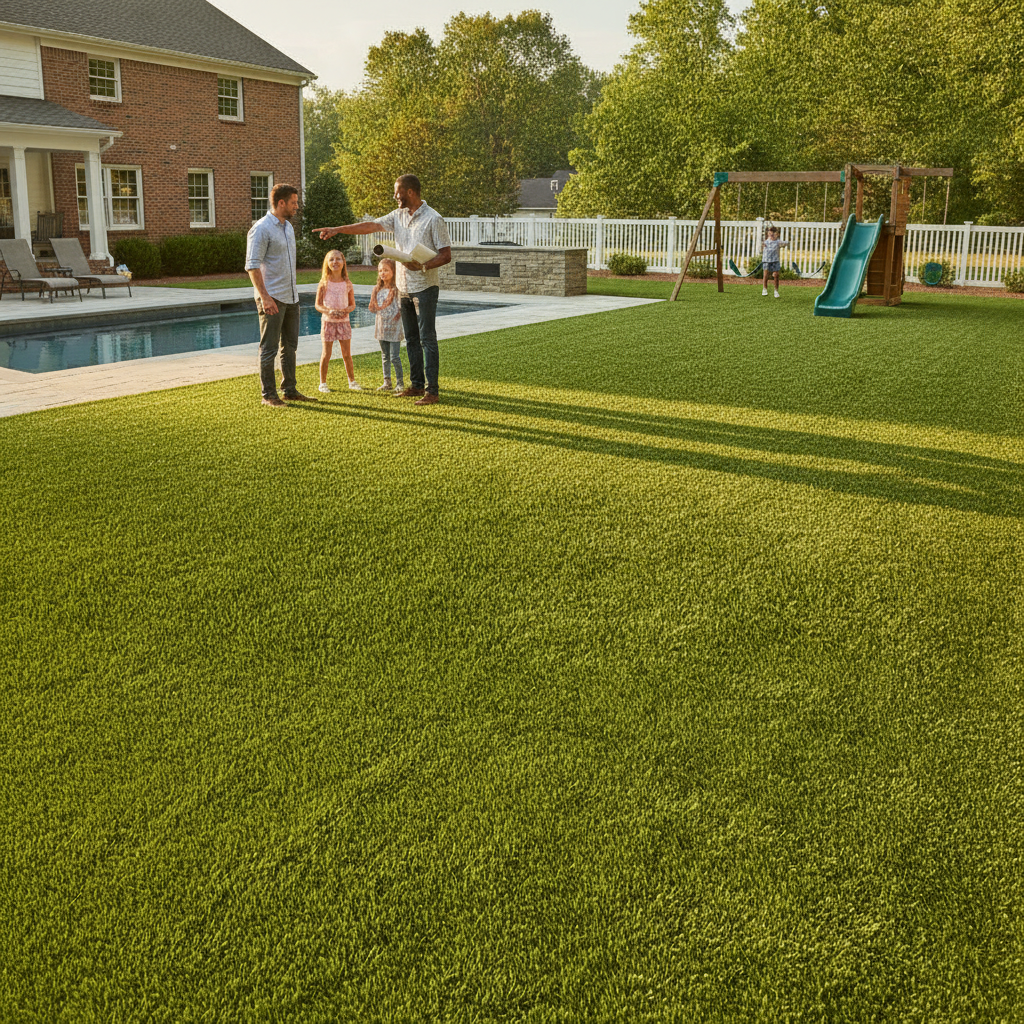
Yes — for most rental properties in Fairfax County, artificial turf is a genuinely smart investment, and not just because it looks good. Done right, it eliminates the ongoing lawn maintenance costs you’d otherwise absorb or fight with tenants over, improves curb appeal during turnovers, and holds up through the kind of heavy use that natural grass simply can’t survive at a rental. But there’s a right way and a wrong way to approach this, and the difference usually comes down to product selection, base preparation, and whether you’re working with an installer who understands the specific demands of this region.
Why Rental Properties in Northern Virginia Are a Natural Fit for Synthetic Turf
If you manage even a handful of single-family rentals or townhomes in communities like Burke, Springfield, or Falls Church, you already know the lawn problem. Tenants don’t mow on schedule. Irrigation systems get ignored. Grass dies in patches under a hot August sun, then gets chewed up by a dog, then sits under standing water all March. By the time your tenant moves out, you’re looking at a bare mud pit and a landscaping bill you didn’t budget for.
Artificial turf removes that variable entirely. A properly installed synthetic lawn doesn’t need watering, mowing, fertilizing, or reseeding between tenants. You photograph the yard before move-in, and it looks essentially the same when they leave — because there’s nothing to kill. That’s a real, measurable reduction in turnover costs, and in the DMV’s competitive rental market, a clean, green yard photographs better and leases faster.
There’s also the water angle. Fairfax County does experience periodic watering restrictions during dry summers, and a natural lawn on a rental property is essentially unmanaged during those stretches. Synthetic grass sidesteps that problem entirely.
What Durability Actually Looks Like for a High-Turnover Yard
Not all turf holds up the same way under rental conditions. Standard residential turf products rated for light residential use — the kind of thing you’d see marketed toward a homeowner who carefully brushes the blades twice a year — can wear faster when you factor in heavy foot traffic, dogs, kids, and the absence of consistent care between tenants.
For rental applications, you want a turf product with a face weight of at least 60 oz per square yard, UV-stabilized polyethylene fibers that won’t fade or become brittle after a few Virginia summers, and a pile height in the 35mm–45mm range. That combination gives you a realistic surface lifespan of 15 to 20 years under typical rental conditions — meaning the product likely outlives multiple lease cycles without any intervention from you.
At Grassify, we spec products like Lush Life for residential rental installs because it holds its density and color under sustained use, drains effectively during heavy spring rains, and still looks natural enough to pass HOA review in communities that require it. We’re not going to put a golf green product in a tenant yard or upsell you on features you don’t need.
The Base Prep Issue No One Talks About for Rental Properties
Here’s where a lot of landlords get burned, especially when they go with the cheapest bid or hire a general landscaper who dabbles in turf: inadequate base preparation. This is the topic most competitor installers in the area gloss over in their marketing — they show you the finished green yard and skip the part about what’s underneath it.
In Fairfax County, base prep matters more than almost anywhere else in the Mid-Atlantic because of the soil profile and climate. Northern Virginia sits on heavy clay soil in many neighborhoods. That clay doesn’t drain on its own — it holds water and heaves during freeze-thaw cycles in January and February. If an installer just pulls the sod, lays a thin layer of decomposed granite, and staples turf over it, you’re going to see edge lifting, seam separation, and pooling water within two or three winters. On a rental property, that means complaints, potential liability, and a repair bill.
A proper base for our climate includes compacted crushed aggregate at the right depth (typically 3–4 inches minimum, deeper on problem soils), proper grading for positive drainage away from any structure, and a weed barrier membrane that actually holds up over years rather than decomposing under the turf. When we install, we back that base work with a lifetime warranty on seams, edges, and the base itself — because we know the prep was done right from the start.
Pet-Friendly Turf: The Feature That Pays Off on Rentals
Pet ownership across the DMV is extremely high, and allowing pets — even with a deposit — is one of the fastest ways to expand your rental applicant pool in a competitive market like Arlington or Alexandria. The tradeoff has always been yard damage and odor.
A pet-specific turf system solves both problems at the property level, not the tenant level. Our pet installs use a 5-layer drainage system with a zeolite deodorizer layer built into the infill, antimicrobial fiber treatment, and drainage rates exceeding 400 inches per hour — meaning urine flushes through before it has any chance to pool or bake in. We back that with a 90-day odor-free guarantee. For a landlord, that means you can advertise pet-friendly with confidence and not inherit an odor problem when the tenant leaves.
HOA Rental Properties: What the Approval Process Looks Like
A significant share of rental properties in Fairfax County — particularly townhomes and single-family homes in planned communities like Burke Centre, Rolling Valley, or Kings Park — fall under HOA jurisdiction. That matters for landlords because you, not the tenant, are legally responsible for any exterior modifications that require architectural approval.
Before any install, we pull your HOA’s architectural review guidelines and confirm what pile height, color range, and perimeter treatment they’ll accept. Most HOAs in this area that allow synthetic turf specify a natural-looking product (no sports-field green), a clean border treatment, and sometimes a maximum square footage. We’ve navigated dozens of these approvals across communities in Fairfax County and can help you build the submission package — material spec sheets, drainage details, installation method — that gets approved rather than kicked back.
What Does It Actually Cost, and How Do You Think About ROI?
Artificial turf for a rental property in Fairfax County typically runs between $12 and $20 per square foot installed, depending on the yard size, base conditions, product tier, and access. A standard townhome backyard of 400–600 square feet might run $6,000–$10,000 all-in. A larger single-family lot with front and back yards could be $15,000 or more.
Set that against what you’re actually spending on lawn maintenance now: mowing contracts, irrigation repair, seeding, fertilizing, and the turnover landscaping you pay between tenants. For a lot of Fairfax County landlords managing properties in communities like Fairfax, Springfield, or Falls Church, that’s $1,500–$3,500 per year in ongoing landscape costs, plus periodic turnover costs. At that rate, a quality turf install often pays for itself within five to seven years — and then continues delivering savings for another decade or more. That’s before you factor in the lease-speed benefit of a clean, photogenic yard in a market where first impressions matter.
Frequently Asked Questions: Artificial Turf for Rental Properties in Fairfax County
Will tenants damage the turf?
Normal use — foot traffic, outdoor furniture, pets, kids — won’t damage a properly installed commercial-grade turf product. The fibers are UV-stabilized and designed for sustained use. The main thing that can damage turf is cutting or puncturing it with sharp objects, which you’d address in the lease the same way you’d address damage to any other property feature.
Can I install turf just in the backyard and leave the front as natural grass?
Yes, and this is actually a common approach for HOA properties where the front yard appearance is more tightly regulated. Backyard installs are completely independent of front yard treatments.
Does artificial turf affect property value in Fairfax County?
This varies by neighborhood and buyer pool, but for rental investment properties the more relevant metric is net operating income — which turf directly improves by cutting maintenance overhead. Among buyers of investment properties, low-maintenance landscaping is generally viewed as a positive feature.
What happens if there’s a plumbing or irrigation issue under the turf?
We document the installation with a layout diagram and ensure that access points for cleanouts, irrigation shutoffs, and utility access are not permanently covered. Turf can be lifted and relaid in those areas if necessary, and a reputable installer will plan for that upfront.
How do I handle the turf between tenants?
A quick rinse with a garden hose and a pass with a stiff-bristled broom is all it typically takes to reset the yard between tenancies. There’s no mowing, reseeding, or fertilizing involved. For pet-specific installs, we recommend a diluted enzyme cleaner rinse at turnover, which takes about 20 minutes.
Ready to Stop Managing Your Rental Yard and Start Ignoring It?
If you’re managing rental properties in Burke, Fairfax, Arlington, Alexandria, or anywhere across Fairfax County, Grassify can give you a realistic picture of what a turf install would cost, how long it would take, and whether it makes financial sense for your specific property. We’ll walk the site, assess the base conditions, check your HOA requirements if applicable, and give you a written quote — no pressure, no vague estimates.
Request your free consultation here and let’s figure out if turf is the right move for your rental portfolio.


