
How Does Artificial Turf Hold Up Through a Northern Virginia Winter? What Fairfax Homeowners Should Know
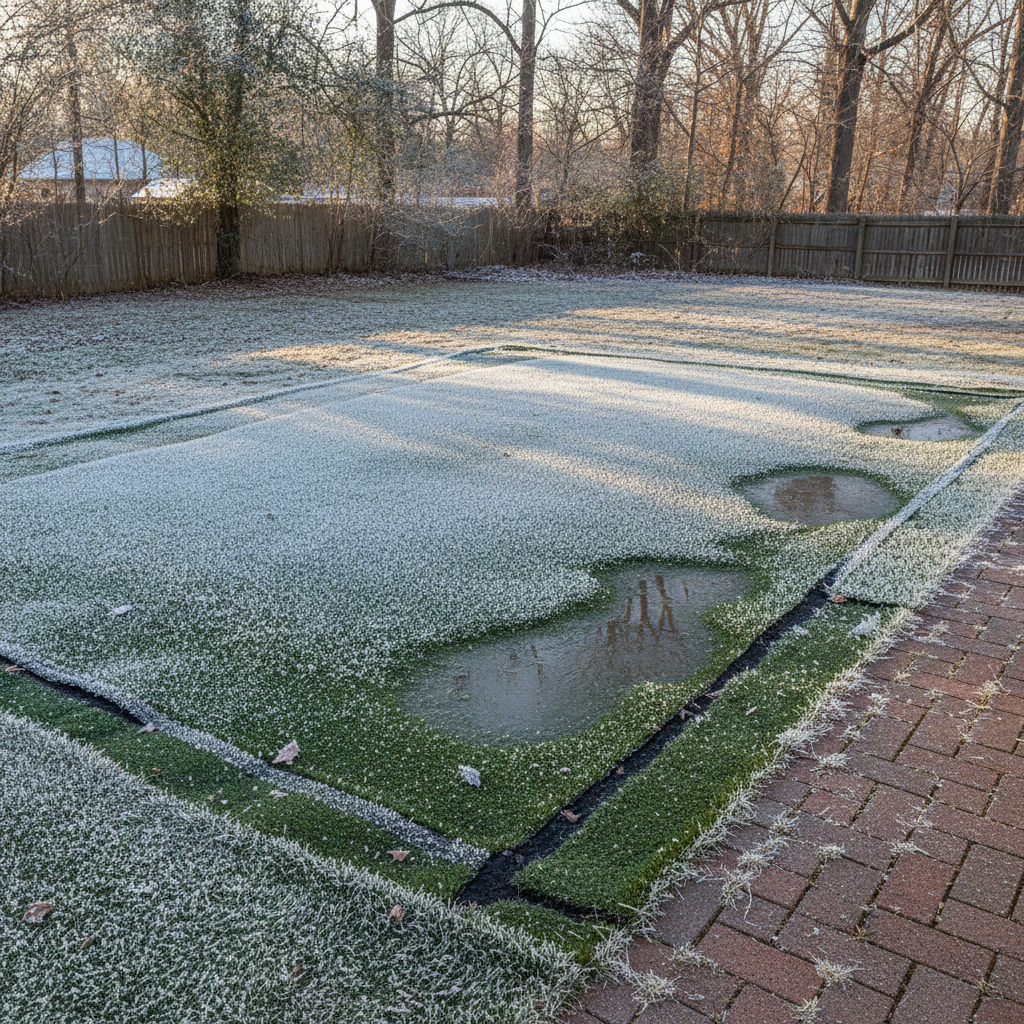
Artificial turf holds up extremely well through a Northern Virginia winter — but only when it’s been engineered and installed correctly from the ground up. If you’re a homeowner in Fairfax, Burke, or anywhere across Fairfax County weighing a turf installation before the cold months hit, the most important thing to understand is this: winter doesn’t damage good synthetic grass. Winter exposes bad installation. Freeze-thaw cycles, frost heave, and saturated ground are stress tests your base prep either passes or fails. Here’s what that actually means for your yard.
What the DMV Winter Actually Does to Synthetic Turf
Northern Virginia doesn’t get the punishing winters of the Midwest or New England, but the Beltway corridor has its own unique challenge: unpredictable freeze-thaw cycling. Temperatures here routinely swing from the mid-20s overnight back into the 50s by afternoon, sometimes multiple times per week between November and March. That repeated contraction and expansion puts real mechanical stress on the ground beneath your turf.
When moisture gets into a poorly compacted base and freezes, it expands — sometimes enough to lift the crushed aggregate layer, push up edges along a patio or curb, and open seams that were otherwise holding. By spring, homeowners with budget installations or DIY jobs often find rippling, lifting perimeter edges, or drainage that’s backed up because the base has shifted and compacted unevenly. In neighborhoods like Lake Braddock and Burke Centre where HOA landscaping scrutiny is real, those kinds of visible failures are the last thing you want showing up in your front yard in March.
Why Base Preparation Is the Winter Variable That Actually Matters
Most turf marketing — from both product companies and some local installers — focuses on the grass fibers themselves. Pile height, color blend, UV resistance. That’s all relevant, but it’s not what fails in a Virginia winter. What fails is the base.
A properly engineered synthetic turf base for the DMV climate starts with full excavation of native soil — typically 3 to 4 inches for a residential lawn application — followed by a compacted crushed aggregate layer (decomposed granite or Class II base rock) that’s graded for positive drainage. That aggregate base is what gives water somewhere to go when the ground thaws and releases accumulated moisture all at once. Without it, you’re essentially laying turf over a sponge. The sponge freezes, heaves, and deforms. Spring cleanup becomes a repair call instead of a pressure wash.
At Grassify, every residential installation — whether it’s a backyard lawn in Springfield or a side yard in Great Falls — includes proper excavation, compacted base prep, and perimeter bender board anchoring that accounts for thermal movement. That’s not an upsell. It’s the minimum standard for an installation that’s supposed to last 15 to 20 years.
The Seam and Edge Problem Nobody Talks About
Here’s the section most competitor content completely skips over, and it’s one of the most common winter-related complaints we hear from homeowners who had turf installed by general landscapers or out-of-state franchise crews: seam separation and edge lifting after the first hard freeze.
Synthetic turf backing materials have a small but real coefficient of thermal expansion — meaning the material physically contracts in cold weather. When seams are glued under sub-optimal conditions (too cold, too damp, or with the wrong adhesive formulation), the contraction stress pulls them apart. When perimeter edges aren’t properly nailed, stapled, and anchored with bender board that’s staked into stable ground, they peel back.
The fix isn’t complicated — it just requires doing it right the first time. Use the correct cold-weather-rated seam tape and adhesive (not a budget-bin alternative). Allow adequate cure time before foot traffic. Anchor perimeter bender board at appropriate intervals with landscape spikes driven into the compacted base, not just the top layer of aggregate. These details aren’t visible once the job is done, which is exactly why some installers skip them.
When you’re evaluating a turf contractor in Fairfax County, ask directly: what adhesive system do you use for seams, and what’s your cold-weather installation protocol? If they look at you blankly or say they adjust based on the job, that’s a meaningful data point.
Can You Install Turf in Winter in Northern Virginia?
Yes, with limitations. Ground temperature matters more than air temperature for installation. Adhesives used in seaming typically require ground temps above 40°F to cure correctly. That’s achievable on most days in the Fairfax area through November and into early December. Deep winter installs — January and February when ground can be frozen — are generally not recommended for new residential lawns.
That said, winter is actually an excellent time to plan an install. Lead times for premium turf products are real, base scheduling is easier in slower winter months, and having your turf in the ground before the wet Northern Virginia spring means your drainage is tested before peak use season. We regularly work with Arlington and Falls Church homeowners through late fall to get installs completed before the holidays.
What Existing Turf Needs in Winter (It’s Less Than You Think)
Once your turf is properly installed, winter maintenance is minimal. Synthetic grass doesn’t go dormant, doesn’t need fertilizer, and doesn’t brown out. A few practical notes for Fairfax County homeowners:
- Snow and ice: Light snow can be left to melt naturally. For heavier accumulation, use a plastic snow shovel — never metal — and work with the grain of the turf fibers. Avoid road salt and calcium chloride de-icers directly on the turf surface; they won’t damage the fibers but can accelerate corrosion on any nearby metal edging and can leave residue that affects drainage.
- Frozen surface: Turf fibers become slightly more rigid when frozen. This is normal. They return to full flexibility as temperatures rise. Don’t power-brush or rake frozen turf aggressively.
- Drainage check after thaw: After the first major thaw of the season, walk the yard and look for standing water pooling in low spots. A small amount of brief surface water after a significant rain event is normal. Standing water that persists more than an hour signals a drainage issue worth investigating.
- Infill top-up: Foot traffic over winter can compact or displace infill. A light broom or power brush in early spring restores fiber uprightness and even infill distribution.
Pet Turf and Winter: The Odor Factor Changes With Temperature
If you have a pet turf installation — especially in a smaller yard in a townhome community or a fenced run — winter creates an interesting dynamic. Cold temperatures actually suppress odor significantly, which is one reason some pet owners don’t notice drainage or sanitation issues until spring. When temperatures rise in March and April, trapped ammonia and bacteria that weren’t draining properly through the infill layer become very apparent very quickly.
Grassify’s pet turf installations use a 5-layer drainage system with a zeolite deodorizer layer and antimicrobial infill that maintains odor control through temperature swings, rated at 400+ inches per hour drainage. The infill does the active work of neutralizing waste year-round — not just in warm weather — so you’re not discovering a spring odor problem you thought you’d solved.
Frequently Asked Questions: Turf and Winter in Northern Virginia
Will frost damage my artificial turf?
No. UV-stabilized polyethylene fibers handle frost without issue. The turf surface may feel slightly stiff when frozen, but the material itself isn’t damaged. Frost and freeze-thaw cycles only become a problem at the base layer level — which is why correct base engineering matters.
Can I use a leaf blower on frozen turf?
Yes. Leaf blowing is actually preferred over raking in winter since it moves debris without stressing cold, slightly stiffer fibers. Just make sure you’re not blowing frozen infill out of the surface, which can happen if the infill layer has iced over during a freezing rain event.
Do turf warranties cover winter damage?
It depends on the warranty and the cause. Grassify’s lifetime installation warranty on seams, edges, and base work covers failures caused by installation defects — including freeze-related seam separation or edge lifting that results from improper base prep or adhesive application. Product fiber warranties from manufacturers (typically 8–15 years) cover UV degradation and fiber breakdown, and are not affected by cold weather.
My neighbor had turf installed and his edges lifted after winter. Will that happen to mine?
Not if your base prep and perimeter anchoring are done correctly. Edge lifting after freeze-thaw cycling is almost always a base compaction or anchoring failure — not a turf product failure. Ask any installer you’re considering how they anchor perimeter bender board and what depth they excavate to before you sign anything.
Is it worth waiting until spring to install, or should I do it in fall?
Fall installation is often ideal across Fairfax County and the surrounding DMV suburbs. You avoid the spring mud season entirely, your drainage system gets its first real test during winter rains, and you’re ready to use the yard the moment the weather turns. Installations completed through November in Northern Virginia are well within seasonal window — just verify your installer is following cold-weather adhesive protocols.
Ready to Talk Through a Fairfax County Turf Install Before Winter?
Whether you’re planning ahead for a spring project or want to get a fall installation on the schedule before the ground gets too cold, Grassify is based right here in Burke and has been engineering turf systems across Fairfax County for over a decade. We can walk you through exactly what base prep your yard requires, what product holds up best through DMV winters, and what the full project looks like from excavation to finished surface.
Request a free consultation with Grassify — no sales pressure, just a straight conversation about what your yard actually needs and what it will cost to do it right.


