
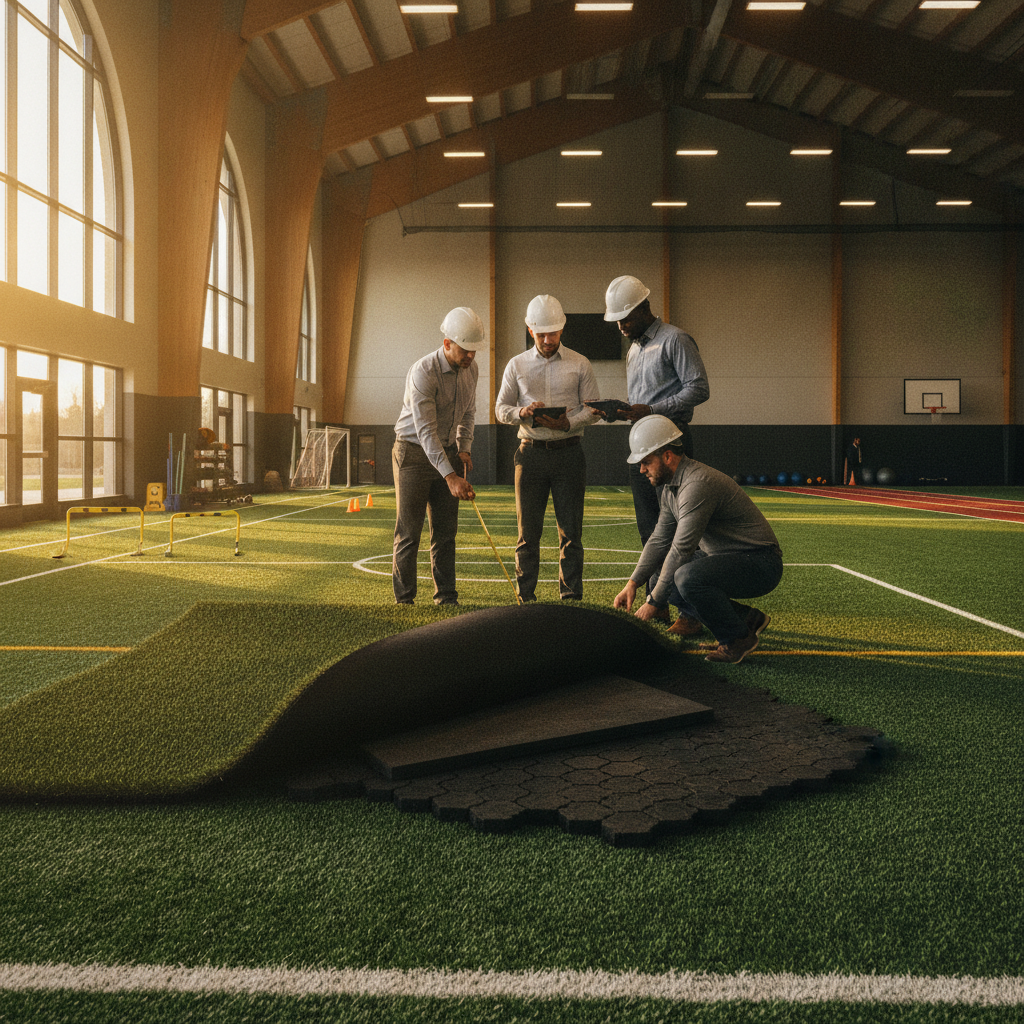
How Do You Choose Artificial Turf for a High-Traffic Commercial Gym or Indoor Sports Facility in Arlington, VA? What Facility Managers Need to Know
If you manage a commercial gym, athletic training center, or multi-sport facility in Arlington, VA, choosing the right artificial turf isn’t a simple product decision — it’s a performance and liability decision. The wrong turf surface can wear out within 18 months under heavy sled pushes and agility drills, fail to meet injury-prevention benchmarks, or create a joint-punishing surface that drives clients away. The right turf system, properly specified and correctly installed, can carry 10 or more years of hard use while enhancing your facility’s brand and attracting serious athletes. Here’s what to actually look for before you sign anything.
Why Indoor Commercial Gym Turf Is a Completely Different Category Than Landscape Turf
This is one of the most common mistakes facility managers make when shopping for turf: they treat it like a landscaping project. It’s not. Outdoor residential lawn turf — the kind installed in backyards across Fairfax County — is engineered for visual appeal, weather resistance, and light foot traffic. Indoor gym turf is a performance flooring system. The fibers, backing, infill, and subfloor interface all have to work together under lateral shear forces, concentrated point loads from weight sleds and prowlers, cleated footwear, and repetitive agility patterns that outdoor turf simply isn’t built to handle.
Fiber construction matters enormously in this context. Indoor gym turf typically uses a shorter pile height — anywhere from 1.5 inches (38mm) down to 0.75 inches (19mm) for high-performance sled lanes — with a dense, tight stitch rate that resists fiber matting under heavy equipment. You want a product rated for commercial foot traffic density, not a residential-grade option from a landscaping catalog. At Grassify, our indoor sports turf installations are spec’d specifically for each facility’s use case, not pulled off a one-size-fits-all product sheet.
Shock Attenuation and Surface Hardness: What the Numbers Actually Mean for Your Facility
If your Arlington facility hosts youth athletics, fitness classes, or any programming where falls are a realistic risk, surface hardness is a non-negotiable specification — not a marketing footnote. Shock attenuation is measured using a Gmax rating: the lower the Gmax, the more energy the surface absorbs during impact. A Gmax rating above 200 is considered dangerous by most athletic safety standards. Quality commercial gym turf systems should deliver a Gmax well below that threshold, typically in the 100–165 range depending on pad thickness and infill depth.
For facilities serving youth athletes in the Arlington County area — or for any indoor space that overlaps with after-school programming, camp clinics, or school partnerships — this number matters from both a safety standpoint and a liability standpoint. Your insurance carrier may have opinions about it too. Ask any vendor you’re evaluating to provide third-party Gmax test data for the specific product and pad combination they’re proposing, not just a general product brochure. If they can’t produce it, that’s a meaningful red flag.
The Content Gap Competitors Are Missing: Multi-Zone Performance Layouts for Commercial Facilities
Here’s something almost no competitor in the DMV market talks about in detail: indoor gym turf installations for commercial facilities almost never involve a single uniform surface. A serious training facility in Arlington, Falls Church, or Washington, D.C. typically needs multiple performance zones within one continuous turf installation — and each zone may demand different pile heights, infill depths, or backing systems to perform correctly.
A typical multi-zone commercial layout might include a dedicated sled push lane (short pile, firm infill, high-density backing), open agility and functional training zones (medium pile, moderate infill for cushion), and a stretching or recovery zone along the perimeter (slightly higher pile, softer underpad). Getting these transitions right — especially the seaming between zones — requires installation experience that general landscapers and out-of-state turf franchises simply don’t have. Seams between turf zones in a high-traffic commercial environment are subjected to constant stress. Poor seaming technique here doesn’t just look bad; it becomes a trip hazard within months.
At Grassify, we’ve been doing commercial and sports turf work across the Beltway corridor long enough to know that multi-zone specification is where most facility projects either succeed or fail. We map out performance zones during the initial site visit, not after the materials are already ordered.
Infill Selection for Indoor Gym Turf: What Works and What Doesn’t
Infill choice for an indoor gym environment is driven by completely different factors than outdoor turf. You’re not worried about UV degradation, freeze-thaw cycling, or drainage rates. What you are worried about is off-gassing in an enclosed space, dust, odor from athletic use, and material migration under heavy equipment movement.
- Crumb rubber: Still used in some commercial applications but increasingly scrutinized for indoor air quality concerns. Worth discussing with your team before committing.
- Coated sand or silica sand: Dense, low-migration, good for sled lanes. Minimal odor. A solid choice for high-load zones.
- Thermoplastic elastomer (TPE): A cleaner alternative to crumb rubber with better indoor air quality profile. Slightly higher cost but worth it for enclosed facilities.
- Organic/cork infill: Used in some wellness-focused gyms for antimicrobial and odor control properties. Not ideal for heavy sled work but can work well in yoga or recovery zones.
For gyms with a strong athletic training focus — think functional fitness studios, football combine prep facilities, or multi-sport training centers — a coated silica or TPE infill in the main training lanes is typically the most durable and lowest-maintenance choice. Your installer should be walking you through this decision, not just defaulting to whatever’s cheapest to ship.
Subfloor Interface: The Detail Most Vendors Skip Over
Unlike outdoor installations, indoor gym turf doesn’t go over crushed stone and a compacted aggregate base. It goes over concrete — and how that interface is handled determines whether your turf system performs correctly and lasts a decade or delaminates, buckles, and becomes a maintenance headache within three years.
Concrete subfloors need to be assessed for moisture vapor transmission before turf is installed. Unchecked moisture vapor rising through a concrete slab in an Arlington facility can compromise adhesive bonds, promote mold growth under the turf backing, and create odor problems that are nearly impossible to remediate without pulling the whole installation. A reputable commercial installer will check the slab moisture content and either address it directly or specify a vapor barrier system before laying any turf.
For facilities where a softer underfoot feel is a priority — recovery zones, stretching areas, or facilities serving older adult populations — a foam shock pad installed between the concrete and the turf system adds both cushion and Gmax performance. Pad thickness typically ranges from 3mm to 16mm depending on the fall height and performance targets for the space. This is a spec-level decision, not an afterthought. Explore our gym turf solutions to see how we approach this for commercial clients across Northern Virginia and the D.C. area.
What to Ask Any Vendor Before You Hire Them
Arlington, Falls Church, and the surrounding Arlington County market has no shortage of turf vendors willing to quote a job. Not all of them have the commercial installation depth to back it up. Before you move forward with any contractor, ask these questions directly:
- Can you provide third-party Gmax test data for this specific product and pad combination?
- Do you have completed commercial gym or athletic facility references in the DMV area I can contact?
- How do you handle slab moisture assessment before installation?
- What is your seam warranty for a high-traffic commercial application, and what does it cover?
- How do you handle multi-zone pile height transitions?
If a vendor can’t answer those questions fluently, they’re probably better suited for backyard lawn installs than a commercial athletic facility.
Frequently Asked Questions: Indoor Gym Turf in Arlington, VA
What pile height is best for a commercial gym turf installation?
For sled lanes and heavy equipment zones, a shorter pile in the 19mm–25mm range is typically best — it provides a firm, low-resistance surface. For open agility zones, 30mm–38mm offers a better athletic feel underfoot. Your installer should spec these individually based on how each zone will be used.
How long does indoor gym turf last under heavy commercial use?
A quality commercial-grade indoor turf system with proper infill and correct subfloor prep should realistically last 10–15 years under heavy daily use. Lower-grade products or improper installation can cut that to 3–5 years. Warranty coverage on seams, edges, and backing is the clearest indicator of how confident an installer is in their own work.
Do I need a permit to install turf inside a commercial facility in Arlington County?
For a straightforward interior flooring replacement, a building permit is typically not required — but if the project involves structural changes, HVAC modifications, or major electrical work alongside the turf installation, permits may apply. Always confirm with Arlington County’s building department or your property manager before starting any commercial renovation project.
How much does commercial indoor gym turf cost per square foot?
Commercial-grade indoor sports turf typically ranges from $12–$25 per square foot installed, depending on pile height, infill type, pad system, and the complexity of the layout. Multi-zone facilities with seam-intensive configurations will fall toward the higher end of that range. We provide transparent, itemized quotes — no hidden material markups or vague line items.
Can you install turf over an existing rubber gym floor or interlocking tiles?
In some cases, yes — but it depends on the condition, flatness, and adhesion profile of the existing surface. We assess every subfloor before quoting. Installing over a damaged or uneven surface without remediation is one of the leading causes of premature turf failure in commercial facilities, and we won’t recommend it just to close a deal faster.
Ready to Spec Your Arlington Facility’s Turf System the Right Way?
Whether you’re opening a new athletic training studio near Rosslyn, renovating a multi-sport facility in Alexandria, or upgrading a fitness center anywhere across the Northern Virginia and D.C. corridor, Grassify brings the commercial installation experience and technical depth to get it done right. We’re not a landscaping company moonlighting in gym flooring — sports and performance turf is core to what we do.
Reach out today for a free on-site consultation and facility assessment. We’ll walk your space, evaluate your subfloor, map out your performance zones, and give you a detailed proposal with real specs — not a generic square-foot estimate built on guesswork. Contact Grassify here and let’s start building a surface your athletes will actually notice.


