
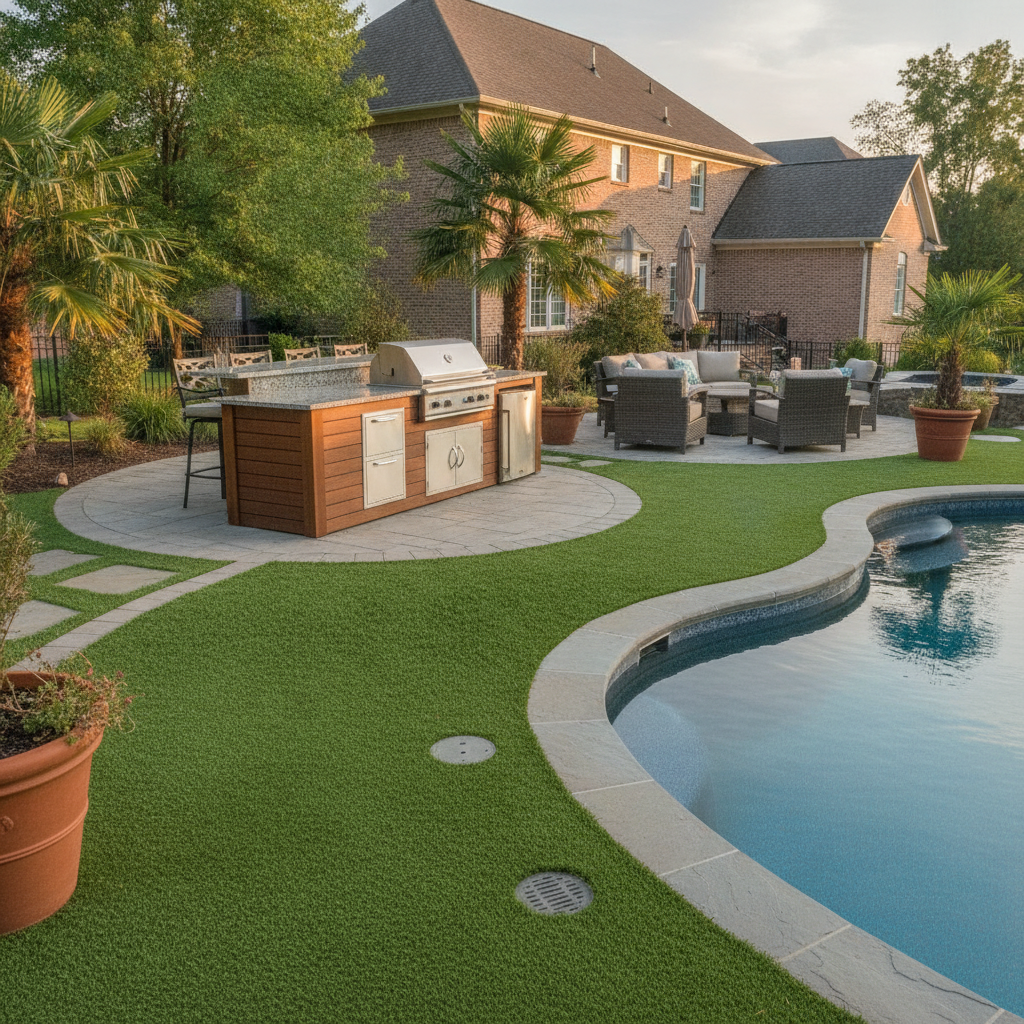
How Do You Install Artificial Turf Around an Outdoor Kitchen or Backyard Entertainment Area in Burke, VA? What Homeowners Need to Know
Yes, you absolutely can install artificial turf around an outdoor kitchen or entertainment setup — but it has to be done right. In Burke, VA, where backyards range from sprawling quarter-acre lots in Burke Centre to tighter-than-expected spaces in Rolling Valley, we see this project come up constantly. Homeowners invest in beautiful outdoor kitchens, pergolas, fire pits, and dining areas, and then realize that bare mulch, dying natural grass, or cracked patio pavers make the whole space look unfinished. Artificial turf bridges those gaps beautifully — but proximity to grills, smokers, fire features, and high-traffic foot traffic demands a different level of planning than a standard backyard lawn installation.
Why Outdoor Kitchen Turf Projects Are Different From a Standard Lawn Install
Most turf articles — and frankly, most competitor websites in the DMV area — treat every residential install the same way. They show a pretty backyard photo and list a few generic benefits. What they don’t explain is that an outdoor entertainment area introduces two specific risks that a plain backyard lawn does not: heat exposure and grease or ember contact.
Synthetic grass fibers are typically made from polyethylene or a polyethylene-nylon blend. Standard polyethylene melts at around 250–280°F — a temperature that the side burner of a gas grill, an ember from a wood-fired pizza oven, or even a dropped coal from a chimney can reach easily. That’s not a hypothetical. We’ve seen it happen to turf installed by general landscapers in Fairfax County who didn’t account for radiant heat zones around built-in grills.
The solution isn’t to avoid turf near your kitchen. It’s to design the space with proper buffer zones and select the right turf product from the start.
Choosing Heat-Resistant Turf for Outdoor Entertainment Spaces
Not all synthetic grass is built the same, and heat tolerance varies significantly by fiber composition and backing type. For outdoor kitchen applications, you want UV-stabilized fibers rated for sustained outdoor exposure with a higher melt threshold — and you want a drainage-optimized backing that can handle spilled beverages, marinades, and summer storms equally well.
At Grassify, we typically recommend products with a flow-through perforated backing for entertainment areas, which drains at a rate exceeding 30 inches per hour per square yard. This matters more than most homeowners realize: Northern Virginia gets heavy spring rains, and a patio-adjacent turf installation that pools water near your kitchen base cabinet or outdoor bar is a mold and structural problem waiting to happen.
For areas directly adjacent to a grill station, fire pit, or smoker, we recommend maintaining a minimum 24–36 inch buffer zone of hardscape — pavers, concrete, or composite decking — between the heat source and the turf edge. This isn’t just a best practice; it’s what protects your warranty and your investment. Our pool deck and patio turf installations use similar principles for managing heat from both the sun and surrounding hardscape, and the same logic applies here.
Base Prep: What the Ground Under Your Entertainment Area Actually Needs
This is the section most online guides skip entirely, and it’s where a lot of DIY and budget-installer jobs fall apart within the first year — especially in Fairfax County, where freeze-thaw winter cycles can heave a poorly compacted base and create rippling, uneven turf seams by March.
A properly engineered base for a backyard entertainment area typically includes:
- Native soil excavation: 3–4 inches of existing soil removed to create a stable, level working surface
- Crushed aggregate base layer: 3–4 inches of Class II road base or decomposed granite, compacted to 95% density with a plate compactor
- Weed barrier membrane: Commercial-grade, not the paper-thin landscape fabric sold at big-box stores
- Optional drainage channel integration: For entertainment spaces that sit lower than surrounding hardscape, a French drain or channel drain along the perimeter routes water away from the structure
- Turf installation with nailed perimeter and glued seams: Every seam in a high-foot-traffic area like an outdoor dining space should be hot-glued, not just pinned
One detail that separates a professional installation from a DIY result: the transition edge where turf meets your patio, deck, or kitchen base. In entertainment areas, people are moving constantly — chairs scraping across the turf edge, cooler wheels catching on a seam, kids running between the grass and the patio. Without a solid aluminum bender board edge treatment and a properly glued perimeter, that edge will lift within a season. We back every Grassify installation with a lifetime warranty on seams, edges, and base work for exactly this reason.
Designing the Layout: Traffic Flow, Furniture Zones, and Pile Direction
Here’s something worth knowing before you finalize your design: artificial turf has a grain direction — the fibers face a particular way depending on how the roll was manufactured. In a large open backyard, this is mostly aesthetic. In an entertainment area, it affects how the space looks from your primary viewing angle (usually the back door or sliding glass door) and from photos.
We always orient turf fibers to face toward the main viewing point, which makes the grass look full and lush rather than flattened. In tighter spaces like Springfield townhome patios or compact Burke Station backyards, this detail can make a 400-square-foot entertainment area look twice as polished.
If you’re placing heavy furniture — a large sectional, a dining table with umbrella base, or a built-in bench — on turf, we recommend furniture pads or rubber coasters under the legs. Over time, concentrated weight on a single point can compress infill and flatten fibers. Spreading that load preserves the appearance and texture of the turf across its full lifespan.
For pile height in entertainment areas, we typically recommend 35–40mm — tall enough to look full and feel comfortable underfoot, but not so tall that it catches chair legs or feels unstable when walking with drinks in hand. If children will be using the space regularly, you’ll also want to discuss infill options that stay cooler in direct summer sun, since DMV summers regularly push surface temperatures on standard turf to 140–160°F on a clear July afternoon. Lighter-colored fibers and cooling infill systems can bring that down significantly. Our residential lawn turf guide covers infill and heat management in more depth if you want to read further on that topic.
HOA Considerations for Entertainment Area Turf in Burke and Fairfax County
Many communities in Burke Centre, Longwood Knolls, and Signal Hill are governed by HOAs with architectural review requirements. Entertainment area turf is generally treated differently than front yard turf — most HOAs are less restrictive about backyard installations, particularly when the turf isn’t visible from the street. That said, some HOAs in Fairfax County require you to submit a materials sample and a site plan showing the extent of the turf installation before you break ground.
If your community has an HOA, we’ll help you identify what documentation you need and can provide product spec sheets and installation diagrams that satisfy most architectural review committees. Getting that approval in writing before install day saves everyone a lot of stress.
Frequently Asked Questions: Turf Around Outdoor Kitchens in Northern Virginia
Can turf catch fire near a grill or fire pit?
Synthetic turf won’t ignite like natural grass, but the fibers will melt if they come into direct contact with an ember or significant radiant heat. Maintain a 24–36 inch hardscape buffer around any open flame or high-heat cooking surface. Never place a freestanding charcoal grill directly on turf.
How do I clean grease or food spills off artificial grass?
Most spills can be rinsed off with a garden hose. For grease or oily residue, a diluted dish soap solution (mild, phosphate-free) works well. Avoid bleach or solvent-based cleaners, which can break down the fiber coating and void your manufacturer’s warranty.
What’s the typical cost for turf in an outdoor entertainment area in Fairfax County?
Entertainment area installations in Northern Virginia typically range from $15–$22 per square foot installed, depending on the complexity of edging, drainage requirements, the turf product selected, and site access. Irregular shapes with multiple cut lines cost more than simple rectangles. Request a detailed written quote that itemizes base prep, materials, and labor separately.
How long does it take to install turf around an outdoor kitchen?
A standard entertainment area of 400–800 square feet takes one to two days for a professional crew. More complex projects with drainage integration, perimeter wall cuts, or difficult site access in Alexandria or Great Falls neighborhoods may run three days. We’ll give you a firm timeline before work begins.
Does artificial turf around a dining area get too hot to sit on in summer?
Standard synthetic turf in full sun can get warm on hot summer days — it’s a reality in the DMV. Shaded entertainment areas (under a pergola, sail shade, or roof structure) stay significantly cooler. We can also discuss heat-mitigating infill products for open-sun installations. It’s a conversation worth having at your free consultation before we finalize a product recommendation.
Ready to Finish Your Backyard Entertainment Space the Right Way?
If you’ve been circling this project — turf around the outdoor kitchen, filling in the muddy patch near the pergola, tying together a patio that still looks unfinished — now is a good time to move forward. Fall installations in Burke and across Fairfax County go smoothly: the ground is workable, crews have availability, and your space will be ready before next spring’s first cookout.
Grassify is based right here in Burke, VA, and we’ve worked across Northern Virginia for over a decade. We’re licensed, insured, and every crew member is background-checked. Our installations carry a lifetime warranty on seams, edges, and base prep — and we stand behind it. Request your free consultation today and let’s design an entertainment area that actually works for your backyard.


