
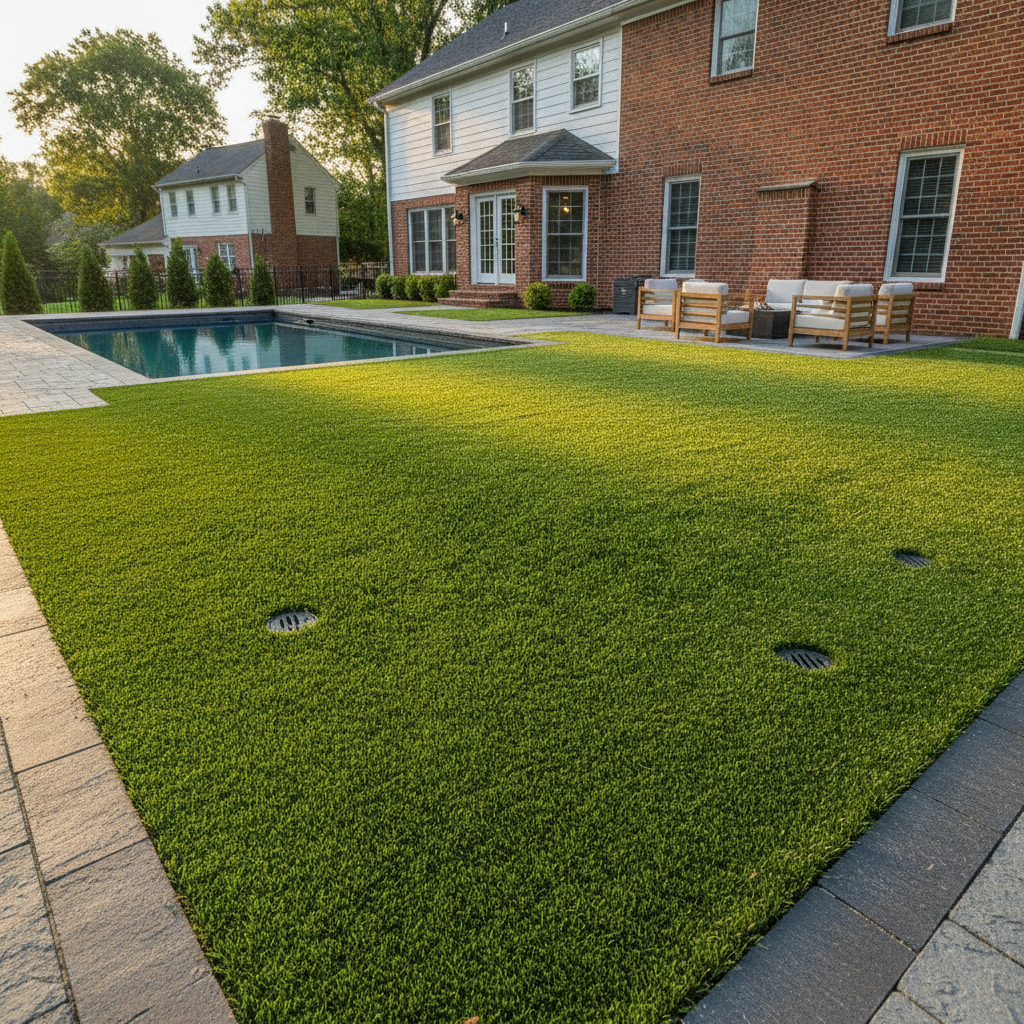
How Do You Convert a Concrete Patio or Brick Surface to Artificial Turf in Burke, VA? What Homeowners Need to Know About Hard-Surface Installations
Yes, you can absolutely install artificial turf directly over an existing concrete patio or brick surface in Burke, VA — and it’s one of the more practical upgrades a homeowner can make to a tired, cracking, or just plain ugly hardscape. But the process looks nothing like a standard backyard lawn installation, and most homeowners (and frankly, most general landscapers) don’t understand the differences until something goes wrong. Surface heat buildup, improper drainage, and turf that lifts at the edges within a season are all real outcomes when hard-surface installs are treated like soil installs. Here’s what you actually need to know.
Why Hard-Surface Turf Installations Are Different — and Why This Matters in Fairfax County
On a soil-based install, base preparation is everything: excavating 3–4 inches of native material, laying crushed aggregate, compacting it to grade, and building in positive drainage slope before a single roll of turf goes down. That process governs where the water goes, how the surface feels underfoot, and how well the system handles freeze-thaw cycles — which in Northern Virginia means real stress from November through March.
On a concrete or brick surface, you skip the excavation entirely, but you inherit whatever problems the existing hardscape already has. Cracked concrete with low spots creates pooling. Brick patios with heaved or sunken pavers create ripples in the finished turf surface. Poorly sloped concrete that drains toward the house foundation doesn’t magically drain better just because you’ve laid turf on top of it. A competent installer evaluates all of this before a quote is finalized — not after the job starts.
In Fairfax County specifically, we deal with heavy spring rain seasons and humid summers. If your concrete patio doesn’t drain well under natural conditions, it won’t drain well under turf either, unless the installer addresses the underlying slope issue or installs a perimeter drainage channel first. This is the step most cut-rate installs skip.
What the Hard-Surface Assessment Process Should Look Like
Before any turf goes down over concrete or brick, a qualified installer should do the following:
- Check surface slope and drainage direction. A minimum slope of 1–2% away from any structure is recommended. If the existing slab drains toward the house or toward a wall, that needs to be addressed with perimeter drains or edge channel drains before installation.
- Inspect the surface for structural damage. Hairline cracks in concrete can be tolerable. Large cracks, significant heaving, or crumbling sections may need patching or grinding before the turf goes down, otherwise those imperfections telegraph straight through the turf backing and become visible from above.
- Assess brick joint depth and stability. Loose or recessed brick joints create an uneven substrate. Depending on severity, this may require a leveling layer of compacted decomposed granite or self-leveling compound before installation.
- Consider surface temperature. Concrete and dark-colored brick absorb and radiate heat. Burke summers regularly push surface temps on dark hardscapes above 140°F — which means the turf sitting on top of it will get even hotter without a heat-mitigation strategy in place.
The Heat Problem: What Nobody Tells You About Turf Over Concrete
This is the topic most competitor websites in the DMV area gloss over entirely, and it’s one of the most common complaints homeowners have after a cheap install. Standard synthetic turf over concrete or brick in direct sun can reach surface temperatures that make it uncomfortable or impractical to use during peak summer months. The concrete below retains heat, the turf above absorbs it, and there’s no soil or moisture buffer in between to moderate the temperature the way a soil-based install would.
The solution isn’t to avoid hard-surface turf — it’s to use the right product. Heat-resistant turf with lighter-colored yarn blends, engineered to reflect infrared light rather than absorb it, can reduce surface temperatures by 15–20°F compared to standard turf products. When we’re working on a Burke patio or a Springfield backyard concrete slab, we spec products specifically designed for high-exposure hardscape applications. Pair that with a light occasional misting during peak afternoon heat in July and August, and you have a surface that’s genuinely usable all summer.
If you’re considering turf for a pool deck area specifically, you’ll also want to look at pool deck turf solutions that include chlorine-resistant backing and slip-resistant texture engineered for splash zones — those considerations go beyond just the heat question.
What Goes Between the Concrete and the Turf
On a hard surface install, the layer between the concrete and the turf backing serves multiple functions: it provides cushion underfoot, adds a small degree of thermal buffering, allows drainage to move laterally toward perimeter drains, and protects the turf backing from abrasion against rough concrete over time. The options include:
- Shock pad or foam underlay: A 10mm–15mm foam or rubber pad bonded or mechanically fastened to the concrete before turf is laid on top. This is the most common approach for residential patio conversions. It adds meaningful cushioning, reduces surface temp slightly, and helps the turf feel less rigid underfoot.
- Self-draining underlayment systems: Channeled or dimpled drainage mats that sit between the concrete and the turf, allowing water to move laterally across the surface toward drain points. This is important when you can’t fully re-slope the existing concrete and need drainage redundancy built into the system.
- Direct adhesion (no pad): In some cases — particularly low-traffic decorative installations or areas with excellent existing drainage — turf can be adhered directly to concrete with outdoor-grade adhesive. This produces the flattest, most compact profile but sacrifices cushion and makes future removal harder.
Which approach is right for your project depends on how the space will be used, whether kids or pets will be on it regularly, and the existing condition of the concrete. For family-use patios in neighborhoods like Burke Centre or Signal Hill where the backyard is the primary outdoor living space, a shock pad system almost always makes sense.
How Turf Is Secured on Hard Surfaces
On soil installs, turf is typically nailed or stapled into the compacted aggregate base around the perimeter and at seam lines. On concrete or brick, you can’t nail into the surface, which means adhesion and perimeter fastening strategy changes completely.
Perimeter edges are typically secured using concrete anchor nails into the slab edge or concrete border, or with an outdoor-rated adhesive bead along all edges and seam lines. Seam tape is critical on hard-surface installs — if seams are done poorly on concrete, there’s no base material to hide or absorb imperfection. You see the seam clearly from above. This is where the craftsmanship gap between a professional installer and a general landscaper with turf experience becomes very visible.
For a look at what a properly completed residential turf project involves from start to finish, our installation guide breaks down each phase in detail.
What This Type of Project Typically Costs in Northern Virginia
Hard-surface turf installations generally run in the same range as standard residential installs — roughly $12–$25 per square foot depending on product selection, drainage requirements, and whether a shock pad is included. Some hard-surface jobs are slightly less expensive because there’s no excavation or aggregate base to account for. Others cost more because the existing surface needs significant prep work — crack repair, leveling, or perimeter drain installation — before turf can go down responsibly.
What you should be skeptical of is any quote that doesn’t account for a site visit and surface condition assessment first. A flat price per square foot quoted without seeing the actual patio is almost always missing something.
Frequently Asked Questions: Turf Over Concrete and Brick in the DMV Area
Can I install turf over an old brick patio with uneven pavers?
Yes, but the brick surface needs to be properly assessed first. Significantly heaved or sunken pavers should be releveled, and deep mortar joints may need to be filled or a leveling layer applied before turf goes down. Skipping this step results in a finished surface that looks bumpy from certain angles — and that only gets more noticeable over time.
Will the turf get too hot on my concrete patio in the summer?
It can, especially on south- or west-facing patios in Burke and Fairfax with long afternoon sun exposure. Using a heat-resistant turf product with engineered yarn designed to reflect infrared light significantly reduces surface temps. Light misting during peak heat hours also helps. The right product choice at the time of installation is the most effective long-term solution.
Do I need to remove the concrete before installing turf?
In most cases, no — and demolishing and hauling away existing concrete adds significant cost and disruption. Installing directly over the slab is the standard approach. The exceptions are situations where the concrete is structurally failing, drains directly toward a foundation, or is so severely cracked that no amount of surface prep will produce a flat finished turf surface.
What happens when it rains heavily — where does the water go?
The turf itself is permeable, but concrete is not, so water has to exit through the perimeter of the installation. The installer must ensure adequate slope toward a drain, a channel drain at the low edge, or a perimeter gap that allows water to sheet off. Heavy spring rains in Fairfax County make this non-negotiable. Any install that doesn’t account for drainage direction will pool water under the turf and eventually create backing deterioration and odor.
Can my HOA restrict me from putting turf on my concrete patio?
HOA rules in Northern Virginia typically govern front yards and visible exterior changes more aggressively than private rear patios. A covered or fenced backyard patio conversion is unlikely to trigger an architectural review requirement in most communities, but it’s always worth checking your CC&Rs before you start. In communities across Burke Centre and Rolling Valley, rear patio modifications typically don’t require prior approval — but the rules vary by HOA, so verify before you commit to a timeline.
Ready to Convert Your Patio or Brick Surface in Burke, VA?
If you’ve got a concrete patio or brick surface that’s cracked, faded, or just not getting used anymore, converting it to synthetic turf is one of the more straightforward ways to reclaim that space as an actual outdoor living area — one that looks good, drains properly, and holds up through Fairfax County winters and summers alike. But it has to be done right, with the right product, the right drainage assessment, and seams and edges that will last.
Grassify has been doing exactly this kind of work across Burke, Springfield, and the broader Fairfax County area for years. We don’t subcontract, we don’t cut corners on base prep or drainage, and every install comes with a lifetime warranty on seams, edges, and base work. Contact us to schedule a free on-site consultation — we’ll assess your existing surface, walk you through your product options, and give you a straight quote with no surprises.


