
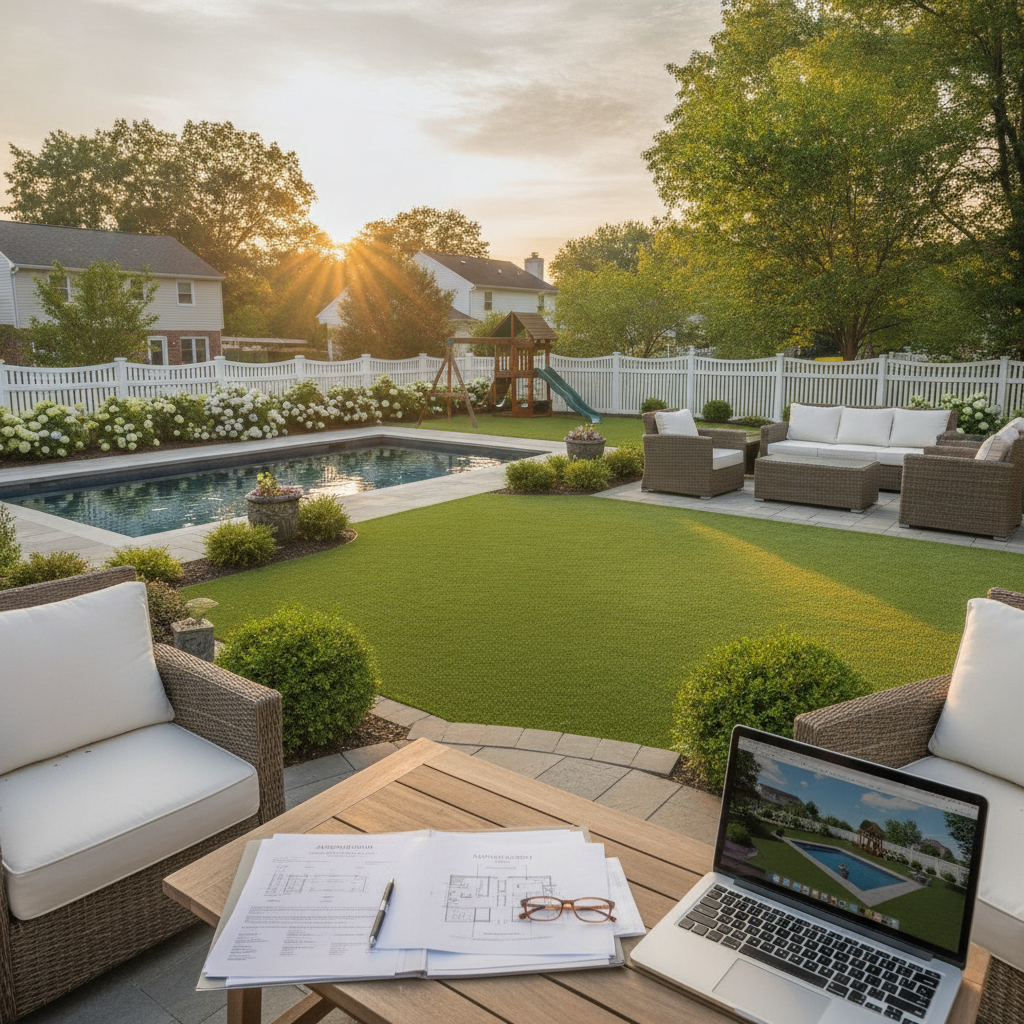
How Do You Get HOA Approval for Artificial Turf in a Springfield, VA Neighborhood? What Homeowners Need to Know Before Installation Day
If you live in a planned community in Springfield, VA — or anywhere in Fairfax County, really — you already know that your HOA gets a say in just about everything you do to the exterior of your home. Artificial turf is no exception. Before a single blade of synthetic grass touches your yard, most architectural review boards (ARBs) will want to see documentation, product samples, and sometimes even a site plan. The good news: getting approved is very doable when you know what to prepare. The frustrating news: most turf companies hand you a beautiful rendering and leave you to figure out the approval process entirely on your own.
At Grassify, we’ve worked through HOA approvals across dozens of Fairfax County communities — from Burke Centre to West Springfield to Kings Park — and we’ve learned exactly what boards approve quickly and what sends an application straight to the rejection pile. Here’s the full picture.
Why HOA Approval for Artificial Turf Is More Complicated in Northern Virginia
The DMV’s suburban communities were largely built out during the 1970s through 1990s, and many of their CC&Rs (covenants, conditions, and restrictions) were written before quality synthetic grass even existed as a residential product. That means your HOA’s documents may reference “natural lawn maintenance” requirements without ever explicitly addressing artificial turf — which creates a gray area that individual boards interpret very differently.
In some Springfield and Fairfax neighborhoods, boards have enthusiastically approved turf installations because they recognize the water savings and consistent curb appeal. In others, boards have initially denied applications citing “unnatural appearance” — and then approved the same project after the homeowner submitted better product documentation. The difference almost always comes down to how well-prepared the application is, not whether the board fundamentally supports or opposes turf.
Fairfax County itself does not require a permit for residential artificial turf installation in most cases, but your HOA’s approval process is entirely separate and legally binding if your deed includes HOA covenants. Skipping that step — even if Fairfax County has no objection — can result in a costly removal order.
What Most HOA Boards Actually Want to See in Your Application
This is the section that most turf companies gloss over — and it’s exactly where homeowners get stuck. A complete HOA application for artificial turf in a Fairfax County community typically needs to include:
- A product specification sheet — Pile height, fiber material, color palette, blade shape, and density. Boards want to see that the turf looks realistic, not like a putting green carpet dropped in the middle of a residential street.
- A physical or digital color swatch — Many ARBs ask for this to compare the turf color against existing neighborhood landscaping. Boards in well-established communities are particularly attentive to whether the turf blends or clashes with surrounding homes.
- A site plan or yard diagram — Even a basic sketch showing which areas will be turfed, where natural borders or mulch beds will remain, and how the perimeter will be finished. This tells the board you’re not replacing every square inch of greenery with plastic.
- Drainage documentation — This one surprises homeowners. Boards in communities with shared stormwater infrastructure sometimes ask how runoff will be handled. A proper crushed aggregate base with a permeable geotextile backing drains at a significantly higher rate than natural grass — but you have to tell the board that in writing.
- Installer credentials — License, insurance, and in some cases a brief description of base preparation methodology. This matters to HOAs because an improperly installed turf job creates aesthetic and drainage problems that affect neighboring properties.
When we work with homeowners in Fairfax County, we put together a full HOA documentation package as part of our pre-installation process. That means you’re not scrambling to find spec sheets or trying to describe the drainage system from memory at an ARB meeting.
The Most Common Reasons HOA Applications Get Denied — and How to Prevent Each One
1. The Turf Looks Too Uniform or “Fake” on the Product Sheet
Boards in communities with mature landscaping and varied lawn textures will sometimes reject turf products that look too uniform in photos. The fix is submitting a product that uses multi-tonal blades — alternating shades of green, plus tan thatch fiber woven through the base layer. Products with 35mm–45mm pile heights and a mix of blade shapes tend to photograph and photograph much closer to natural grass. If your turf installer is showing you one shade of green and calling it a day, that’s worth questioning.
2. No Perimeter Treatment Shown in the Application
One of the most consistent objections we’ve seen across West Springfield and other Springfield-area communities is a lack of edge detail in the submitted plan. Boards want to see that turf installations will have a finished border — typically a bender board, natural stone, or mulch bed edge — that visually integrates the turf into the existing landscape rather than making it look like a carpet laid in a yard. Include a simple border treatment in your plan and this objection largely disappears.
3. Incomplete or Missing Drainage Information
Northern Virginia gets significant spring rainfall, and HOAs in communities with shared drainage easements are increasingly aware of stormwater issues. If your application doesn’t mention how water moves through the installation — specifically that the base is engineered for permeability, not compacted fill — some boards will raise drainage concerns. Including a note that your base uses a compacted crushed aggregate layer designed for high-volume drainage typically resolves this quickly.
4. No Mention of Front vs. Backyard Scope
Some HOA communities in Fairfax County have different rules for front yard versus backyard modifications. Front yard turf installations often receive more scrutiny because they affect street-facing curb appeal. Be explicit in your application about which areas you’re turfing and why, and consider starting a conversation with your ARB chair informally before submitting, especially if you’re doing a full front lawn replacement.
Timeline: What to Expect from Submission to Installation
Most HOA architectural review boards in Fairfax County communities meet monthly, though some larger ones convene every six weeks. That means timing your submission matters. Submit at least two weeks before the next board meeting to ensure your application gets included in that cycle rather than pushed to the following month.
Expect a 30–60 day approval window in most cases, though well-documented applications sometimes get approved at the same meeting or through an administrative review without a full board vote. If the board requests additional information, you typically have 14–30 days to respond before the application lapses.
Plan your installation window accordingly. If you want turf installed before the end of summer or early fall — which is an ideal time to install in Northern Virginia given moderate temperatures and stable soil conditions — submit your HOA application no later than six to eight weeks prior to your target installation date.
Once approval is in hand, a residential lawn turf installation for a typical Springfield or Burke-area backyard of 500–1,500 square feet usually takes one to three days, depending on complexity and site access.
What Happens If You Install Without HOA Approval
This comes up more often than you’d expect, usually when a homeowner works with a company that doesn’t flag the HOA requirement upfront. If your community is HOA-governed and you install turf without prior approval, the board can issue a violation notice requiring you to remove it — at your expense. We’ve heard from homeowners in Burke Centre and Kings Park who had turf removed and reinstalled after going through the proper process, which is an expensive lesson.
The right installer will tell you about HOA approval requirements before they hand you a contract, not after they’ve cashed your deposit.
Frequently Asked Questions: HOA Approval and Artificial Turf in Springfield, VA
Does Fairfax County require a permit for artificial turf installation?
In most residential cases, no. Fairfax County generally does not require a building or land disturbance permit for standard residential synthetic grass installations. However, HOA covenants are legally separate from county permitting, and both apply independently. Always check both before you proceed.
What if my HOA’s CC&Rs don’t mention artificial turf at all?
That gray area is actually common in older Fairfax County communities. If the CC&Rs are silent on synthetic grass, the ARB typically has discretion to evaluate the request under general aesthetic standards. This is exactly when a well-documented application matters most — give the board no reason to improvise a denial.
Can my HOA reject artificial turf even if it looks realistic?
Yes, in theory. HOA boards generally have broad authority over exterior modifications in Fairfax County communities. However, boards that issue a denial are typically responding to a specific concern in the application, not to turf categorically. Address drainage, edge treatment, and product aesthetics in your submission and most boards will work with you.
Will my HOA care what company installs the turf?
Some boards — particularly in higher-end communities in Great Falls or Fairfax — do ask about installer credentials. Providing proof of licensing, insurance, and a warranty on the installation is a reasonable ask and also protects you as the homeowner.
What pile height does most HOA boards prefer for front yard turf?
Boards evaluating front yard turf applications tend to prefer pile heights in the 35mm–42mm range, which closely mimics a well-maintained natural lawn. Very short pile (under 25mm) can look artificial under direct sunlight, and very tall pile (over 50mm) can appear unkempt in some community contexts.
Ready to Start the Process? Grassify Can Help
Getting HOA approval for artificial turf doesn’t have to be a guessing game. Grassify has helped homeowners throughout Springfield, Burke, West Springfield, and surrounding Fairfax County neighborhoods navigate architectural review boards with complete, properly documented applications — and we don’t hand you a contract until your approval is in place.
If you’re thinking about artificial turf for your front yard, backyard, or pet area and you’re not sure where to start with your HOA, reach out to us. We’ll walk you through the approval process, provide full product documentation, and design an installation that your board — and your neighbors — will have no reason to object to.
Request a free consultation with Grassify today and let’s get your project moving in the right direction.


