
How Do You Choose the Right Artificial Turf Infill for a Backyard in Burke, VA?
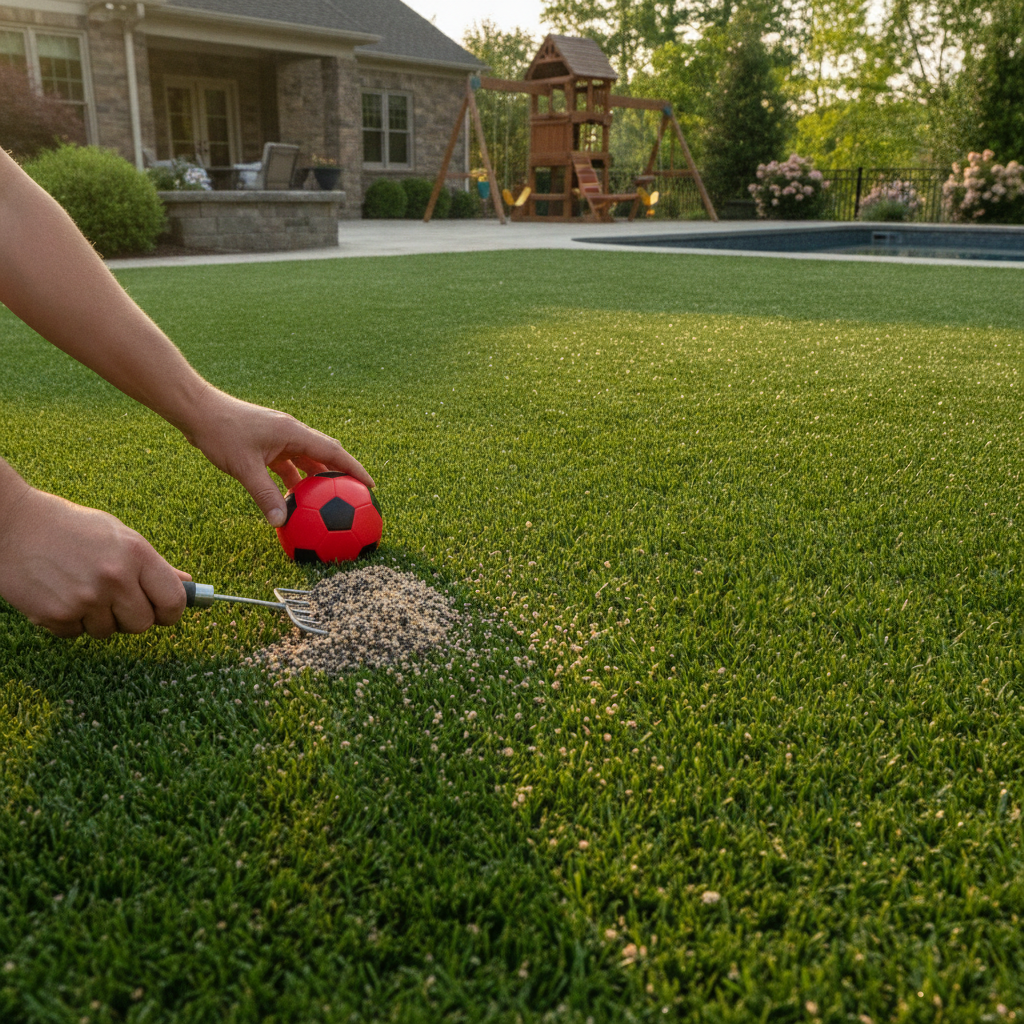
Infill is the material that gets brushed into the fibers of your artificial turf after it’s installed — and it does a lot more than most homeowners realize. It stabilizes the blades so they stand upright, cushions foot traffic, regulates drainage flow, and in pet applications, it can mean the difference between a yard that smells fine after two years and one that doesn’t. Yet if you’ve gotten quotes from local installers in Burke, VA or across Fairfax County, there’s a good chance nobody walked you through what infill actually goes into the system — or why it matters. That gap in the conversation is a problem, because not all infill performs equally in the DMV climate, and the wrong choice for your specific yard can cost you in comfort, odor, and durability.
This guide breaks down every major infill option, what each one does well, where each one falls short, and how to match the right system to your backyard, your household, and the realities of Northern Virginia summers and winters.
Why Infill Is the Variable Most Installers Underexplain
Walk through the websites of most local turf companies and you’ll see a lot of language about pile height, fiber shape, and color options — but infill often gets one sentence or a vague mention of “premium materials.” That’s a disservice to homeowners making a 10-to-15-year investment. The infill layer typically accounts for 10–20% of total installation cost depending on the product chosen, and it directly affects surface temperature, drainage rate, odor control, and how the turf feels underfoot.
In the DMV, the stakes are a bit higher than in dryer climates. Hot, humid summers push surface temperatures up, heavy spring rains test drainage systems hard, and freeze-thaw cycles through winter put stress on compaction. Your infill needs to perform across all of that. Here’s what your options actually are.
Silica Sand: The Standard Workhorse
Rounded silica sand is the most widely used infill in residential turf installations, and for most standard lawn applications in Burke and Springfield, it does the job reliably. It’s angular or rounded depending on grade, with rounded silica preferred because it distributes weight evenly and doesn’t compact as aggressively under foot traffic over time.
Silica sand holds blades upright, adds ballast so the turf doesn’t shift, and supports drainage without blocking it. A properly infilled silica sand system will drain at rates well above 30 inches per hour — more than enough to handle Northern Virginia’s heaviest spring downpours without pooling.
Where silica sand falls short: it doesn’t do anything for odor, it retains heat, and in pet yards it becomes a bacterial harbor over time if the drainage layer underneath isn’t engineered properly. For a clean, low-maintenance residential lawn without pets or kids going barefoot in July, it’s a solid, cost-effective choice. For anything more demanding, you’ll want to layer or upgrade.
Crumb Rubber: What You Should Know Before You Say Yes
Crumb rubber — recycled tire material — has been used in turf systems for decades, particularly in sports fields and playgrounds. It provides excellent cushioning and impact absorption, which is why it’s common in high-traffic athletic applications. But for residential backyards in Fairfax County, it comes with trade-offs that are worth understanding clearly.
First, heat. Crumb rubber retains significantly more heat than sand-based infill. On a 90-degree August afternoon in Burke, a crumb-rubber-infilled surface can reach temperatures 20–30°F higher than a comparable silica sand system. For families with young kids or dogs spending time on the turf, that matters.
Second, there’s ongoing research around particulate exposure, particularly for children on play surfaces. Many schools and daycares across Arlington and Alexandria have moved away from crumb rubber in favor of EPDM or organic alternatives for exactly this reason. For a backyard where your kids and pets play regularly, most experienced local installers today recommend alternative infill systems unless the application is specifically sports-oriented.
Third: once crumb rubber is installed, it migrates. It tracks into your home, stains light-colored surfaces, and is difficult to fully remove if you ever want to switch infill types. Go in with eyes open.
Zeolite: The Odor-Control Layer Pet Owners Need
If you have dogs, zeolite isn’t optional — it’s foundational. Zeolite is a naturally occurring volcanic mineral with a highly porous, cage-like molecular structure that physically traps ammonia molecules from pet urine before they can off-gas as odor. It’s used as a deodorizer layer within pet-specific turf systems, typically blended with or layered beneath silica sand infill.
In Grassify’s pet-friendly turf installations, zeolite is one component of a 5-layer drainage system that also includes antimicrobial infill and a drainage rate exceeding 400 inches per hour — engineered specifically so liquids pass through the turf and base material fast enough that they don’t accumulate, ferment, or create the ammonia buildup that makes many pet turf installations smell within the first year.
Zeolite does eventually saturate and should be refreshed — typically every 12 to 24 months depending on the size of your dogs and how intensively the yard is used. An honest installer will tell you this upfront. One who doesn’t mention it at all is worth questioning.
Coated Sand and Antimicrobial Infill: The Middle-Ground Option
For households that want more performance than plain silica but aren’t running a dedicated pet yard, coated sand infills offer a useful step up. These are silica sand particles treated with polymer coatings or antimicrobial agents — typically silver-ion-based — that inhibit bacterial growth without the heat-retention issues of crumb rubber.
They perform well in mixed-use backyards: a family with one or two dogs who uses the yard for both pets and kids’ play. The antimicrobial treatment extends the odor-free window and keeps the infill environment cleaner between maintenance rinses. They’re also less disruptive to install and replace than zeolite if you ever need to refresh the infill layer.
Organic Infill: Real Benefits, Real Limitations
Cork and coconut husk-based organic infills have grown in popularity, particularly among homeowners in communities like Burke Centre and Rolling Valley who want a more natural feel underfoot and prefer to avoid synthetic materials entirely. Organic infill runs cooler than crumb rubber — sometimes noticeably cooler than even silica sand — and has a softer, more natural texture.
The honest limitation: organic infill breaks down over time. In the DMV’s wet climate, cork and coconut materials can degrade faster than in drier regions, which means more frequent replenishment. They also tend to cost more per pound than silica sand. If you prioritize surface temperature and eco-friendliness and are comfortable with maintenance top-offs every few years, organic infill is worth the conversation. If you want a true set-it-and-forget-it system, silica or coated sand will outlast it with less upkeep.
Matching Infill to Your Specific Application
Here’s a straightforward breakdown for the most common backyard scenarios across Fairfax County:
- Residential lawn, no pets, light foot traffic: Rounded silica sand. Cost-effective, durable, handles DMV rain loads without issue.
- Family yard with kids who play regularly: Coated antimicrobial sand or organic infill. Lower heat retention than crumb rubber, cleaner surface for barefoot use.
- One or two dogs, moderate use: Silica sand blended with zeolite, layered over a high-flow drainage system. This is the minimum spec for odor control that actually works.
- Multiple dogs or a dedicated dog run: Full 5-layer pet drainage system with zeolite deodorizer layer, antimicrobial infill, and a drainage rate engineered above 400 in/hr. No shortcuts.
- Backyard putting green: Fine-grade silica sand infill for true ball roll. Putting green turf uses a different fiber and backing than lawn turf, and infill application is precision work — too much and the ball slows down, too little and the surface won’t support proper roll.
What to Ask Any Installer Before You Sign a Contract
Before any turf project moves forward — whether it’s a 400-square-foot townhome patio in Springfield or a full backyard in Burke — ask these questions directly:
- What infill type are you using, and how many pounds per square foot are you installing?
- Is zeolite included in the system if I have pets, or is that an add-on?
- What is the drainage rate of this complete system — turf plus base plus infill?
- Will this infill need to be replenished, and at what interval?
- Is your infill California Prop 65 compliant?
If an installer can’t answer those questions on the spot, that tells you something about how much they actually understand the system they’re selling you. A reputable Fairfax County turf installer with real installation experience will answer all of them without hesitation and will document the infill spec in your written contract.
Frequently Asked Questions
How much infill does a typical backyard turf installation use?
Most residential applications use between 1.5 and 3 pounds of infill per square foot, depending on the pile height of the turf and the intended use. Pet turf systems and sports applications tend to run toward the higher end. Your installer should specify exact infill weight in the installation plan.
Does infill affect how hot my turf gets in summer?
Yes — significantly. Crumb rubber runs the hottest. Silica sand is moderate. Organic infill (cork, coconut husk) and certain coated sand products run noticeably cooler. In a Northern Virginia summer where surface temps on dark-colored turf can already climb, infill selection is a meaningful factor in barefoot comfort and pet safety.
Can I add zeolite to existing turf that already has a different infill?
In some cases, yes. Zeolite can be brushed into existing turf if the pile height allows it, but the results depend heavily on what’s already in the system and whether the underlying drainage is engineered to handle pet use. If odor is already a problem, it’s worth having a professional assess whether infill refresh alone will solve it or whether deeper remediation is needed.
Is crumb rubber safe for kids and pets in a residential backyard?
The research is ongoing and the scientific picture is not fully settled. Many local schools and daycares in Alexandria and Arlington have moved away from crumb rubber for play surfaces as a precautionary measure. For private residential use, many families in the DMV are choosing coated sand, organic infill, or EPDM alternatives. Discuss the options with your installer and make the call that aligns with your comfort level.
How often does infill need to be refreshed or replaced?
Silica sand and coated sand infill in a non-pet yard can last the life of the turf — 12 to 20 years — without replacement if the system drains properly and doesn’t get heavily compacted. Zeolite in a pet yard typically needs a partial refresh every 12 to 24 months. Organic infill degrades faster in wet climates like the DMV and may need top-off applications every 2 to 4 years depending on conditions.
Ready to Talk Through the Right System for Your Yard?
Infill isn’t a detail you should leave to chance — or to an installer who skips the conversation entirely. At Grassify, every project starts with a real assessment of your yard, how it’s used, and what your household actually needs from the turf system. We’re based in Burke, VA, we work across Fairfax County and the broader DMV, and we document every spec — including infill type, weight, and drainage engineering — in writing before a single shovel goes in the ground.
If you’re ready to get straight answers and a no-pressure consultation, reach out to Grassify here and we’ll schedule a free site visit. Bring your questions. We’ll bring the answers.


