
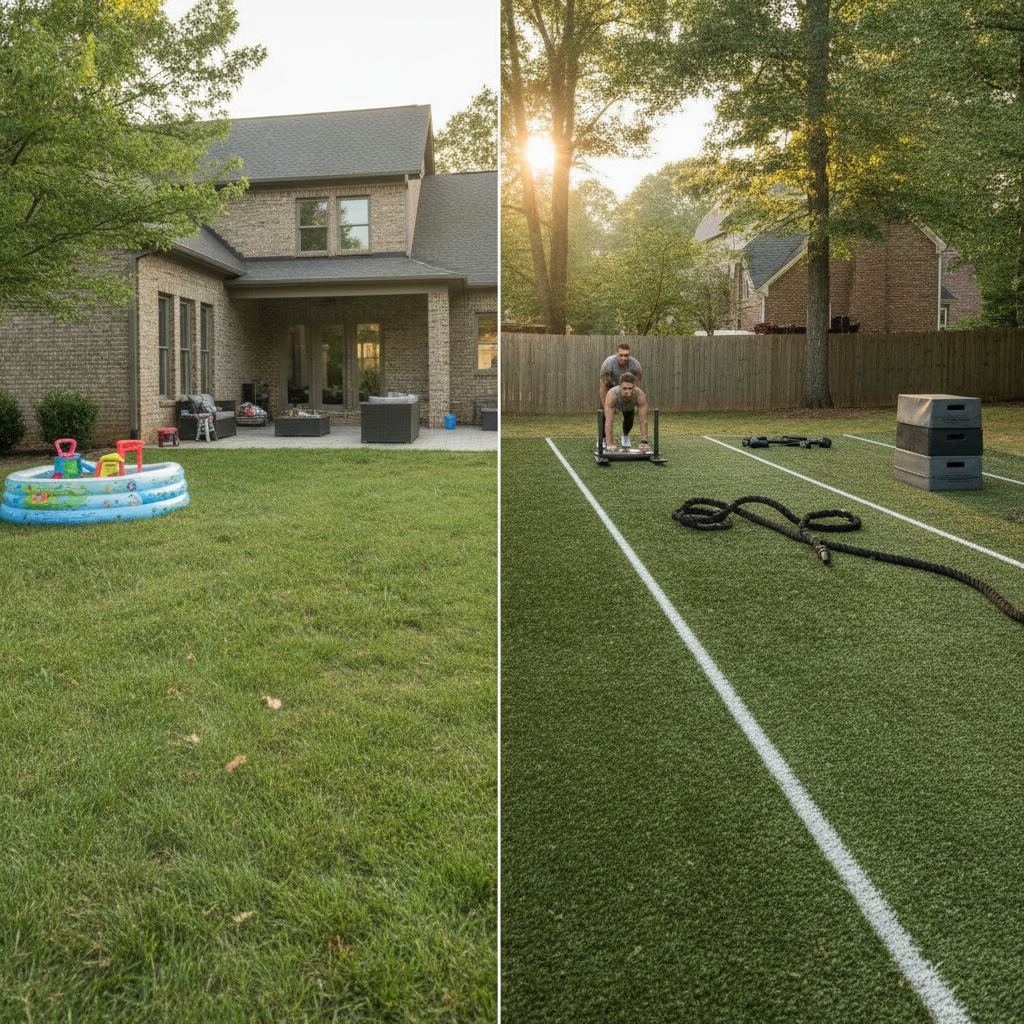
How Do You Install Artificial Turf on a Gym or Fitness Facility’s Outdoor Training Area in Bethesda, MD?
If you run a gym, personal training studio, or functional fitness facility in Bethesda and you’re thinking about adding an outdoor turf training area, the short answer is: yes, it absolutely works — but only if the turf is specified and installed correctly for commercial athletic use. This is not the same product or process as a residential lawn. The wrong turf, the wrong base, or the wrong infill will have your surface looking tired and smelling like a locker room within two summers. Done right, an outdoor training surface can become one of the best marketing assets your facility has.
Why Outdoor Gym Turf in the DMV Requires a Commercial-Grade Approach
Bethesda’s fitness market is dense and competitive. Between the boutique studios along Wisconsin Avenue, the larger club facilities near Chevy Chase, and the growing demand for outdoor functional fitness spaces across Montgomery County, gym owners here are investing in their facilities more seriously than ever. Outdoor turf training areas have become a genuine differentiator — boot camps, HIIT sessions, sled pushes, tire flips, agility ladder drills, and stretching areas all benefit from a purpose-built turf surface.
But here’s what most general contractors and even some turf companies miss: the requirements for a commercial training surface are fundamentally different from a residential backyard. You’re dealing with concentrated, repetitive load — sleds, weighted vests, athletes pushing off lateral cuts dozens of times per hour. You need a turf that can absorb that punishment without seams failing, fibers matting, or infill migrating. And in the DMV’s humid summer heat, surface temperature management matters more than most vendors will tell you.
The Turf Spec That Actually Holds Up for Athletic Use
For outdoor training areas, Grassify typically recommends a short-pile, high-density turf in the 35mm–42mm range, depending on the specific activities planned. Taller pile heights (50mm) look lush for lawns but compress under sled weight and athletic movement in ways that reduce performance feel and accelerate fiber wear. You want a tighter, denser face weight — generally 60 oz/yd² or higher — that resists matting under repeated foot traffic and equipment drag.
The infill system matters just as much as the fiber. For training areas, a dual-infill approach using silica sand as a base layer topped with a performance rubber or thermoplastic elastomer (TPE) infill delivers the cushion and stability that athletes need without the surface becoming too bouncy or unpredictable. Crumb rubber remains common in older sports installations, but TPE infill runs cooler and is increasingly preferred for facilities that want to avoid the heat buildup concerns that come with standard rubber on a Bethesda rooftop or sun-exposed concrete pad in July.
For facilities focused on agility and speed work specifically, our outdoor sports turf options include low-pile surfaces engineered specifically for lateral movement, cut angles, and consistent ball roll — not just visual appeal.
Base Prep: The Step Most Vendors Underestimate
This is where a lot of installations fail — and where most competitor content goes completely silent. Installing commercial training turf over an existing concrete pad is actually the more straightforward scenario: the concrete acts as your base, you apply a shock pad or foam underlayment for cushion, and then the turf goes down over it. You get excellent drainage through the turf’s perforated backing (assuming proper slope or drainage channels are factored in), and the concrete keeps everything locked and stable.
Installing over compacted aggregate — which is typical for rooftop builds, courtyard builds, or facilities that want to go directly over ground — requires a much more engineered approach. You need a minimum 4-inch compacted crushed aggregate base, properly graded for drainage, with geotextile weed barrier underneath. In Bethesda’s wet spring and early summer climate, a poorly graded base will shift, develop soft spots, and eventually create uneven seams that are both an injury hazard and an eyesore. For heavy commercial use, some installations also benefit from a binder layer between the aggregate and turf for additional stability.
The freeze-thaw cycles the DMV sees every winter are harder on outdoor base prep than most gym owners realize. Water that gets trapped in a base that wasn’t properly graded will expand, heave, and eventually create surface irregularities that no amount of re-sanding will fix. Getting the drainage engineering right on day one is what separates an installation that lasts 12–15 years from one that needs costly repairs in year three.
Heat Management for Outdoor Training Surfaces in Summer
This is the topic that competing turf companies in the DMV area almost universally gloss over — and it matters enormously for fitness facilities. Standard synthetic turf can reach surface temperatures of 140–165°F on a direct-sun concrete pad on a hot July afternoon in Bethesda. That’s not safe for barefoot movement or prone exercises, and it creates a real liability issue for gym owners who advertise outdoor training sessions.
There are practical solutions. Heat-mitigating infill systems using coated sand or organic infill (cork, coconut fiber) absorb and dissipate heat more effectively than standard rubber or silica. Some facilities also use light-colored turf fibers that reflect more solar radiation than darker fiber options. Shade structures, pergolas, or tensile canopies over part of the training area make a significant practical difference as well. When we’re scoping an outdoor gym installation, we always walk the site at midday to understand the sun exposure before recommending a specific fiber color and infill system.
Drainage Rates and Why They Matter for Group Fitness
If you’re running outdoor boot camps or group sessions, you need a surface that recovers quickly after rain. A commercial-grade outdoor training turf should drain at a minimum of 30 inches per hour — and ideally significantly higher. Grassify’s installations are engineered to achieve drainage rates that keep the surface usable within minutes of a heavy DMV downpour, not hours. That means designing the infill compaction correctly, using a perforated backing with adequate perforation density, and ensuring the underlying base has the slope and drainage path to carry water away from the training zone.
For gym owners in Rockville, Chevy Chase, or anywhere across Montgomery County running outdoor classes, this is a real operational consideration. If your surface takes four hours to drain after a summer storm and you had a 6 a.m. class scheduled, that’s a direct revenue impact. Proper drainage engineering eliminates that problem.
If you’re also considering an indoor turf lane or gym floor installation, you can explore Grassify’s gym turf solutions — the spec differences between indoor and outdoor athletic surfaces are significant and worth understanding before committing to a product.
What Does Outdoor Gym Turf Installation Actually Cost in the Bethesda Area?
Commercial outdoor training turf in the DMV typically runs between $15–$25 per square foot installed, depending on the surface prep complexity, infill system, pile height, and any shock pad or underlayment requirements. A 1,500 sq ft outdoor training area on an existing concrete pad with straightforward access will land at the lower end of that range. A ground-up installation with full aggregate base prep, drainage channeling, and a premium heat-mitigating infill system will be higher. The right contractor will walk your site before quoting — anyone offering a firm price over the phone without a site visit isn’t doing proper commercial scoping.
Frequently Asked Questions: Outdoor Gym Turf in Bethesda and the DMV
Can I install outdoor training turf over asphalt?
Yes — asphalt is actually a good base for turf if it’s structurally sound and properly sloped for drainage. We assess the existing surface for cracks, heaving, and grade before recommending whether to go directly over it or apply a leveling layer first.
How long does commercial outdoor gym turf last with heavy daily use?
With proper maintenance (regular grooming, infill top-ups, seam inspections), a properly specified commercial training turf in the DMV climate typically performs well for 10–15 years. High-traffic zones like sled tracks may show wear sooner and can often be replaced in sections rather than requiring a full reinstall.
Do I need a permit to install outdoor turf at a commercial facility in Montgomery County?
It depends on the scope. Turf installed on an existing hardscaped surface typically doesn’t require a separate permit, but if you’re altering grading, adding drainage infrastructure, or working within a leased commercial property, it’s worth confirming with your landlord and the county. We can help you understand what’s typically required during the scoping process.
What’s the difference between outdoor sports turf and a residential lawn product?
Fiber density, face weight, pile height, infill spec, backing durability, and seam reinforcement — commercial training surfaces are built to withstand concentrated mechanical loads that residential lawn turf simply isn’t designed for. Using a residential product in a commercial training environment will result in premature fiber wear and seam failure.
Can outdoor training turf be customized with gym logos or boundary lines?
Yes. We can incorporate inlaid lines, agility patterns, yardage markers, or logo panels during installation. This is done using turf panels of contrasting color, not paint, so it holds up over years of use without fading.
Ready to Build Your Outdoor Training Area?
Whether you’re adding a turf sled lane behind your Bethesda studio, converting a flat rooftop into an outdoor training deck, or building out a full functional fitness yard from scratch, Grassify designs and installs commercial turf surfaces built for real athletic use in the DMV climate — not just cosmetic curb appeal. We’re based in Burke, VA and work with fitness facilities, gyms, and studios across Northern Virginia, Montgomery County, and the broader Beltway corridor.
Request a free on-site consultation and we’ll walk your space, answer your spec questions, and give you a realistic picture of what your installation will look like — before you commit to anything.


