
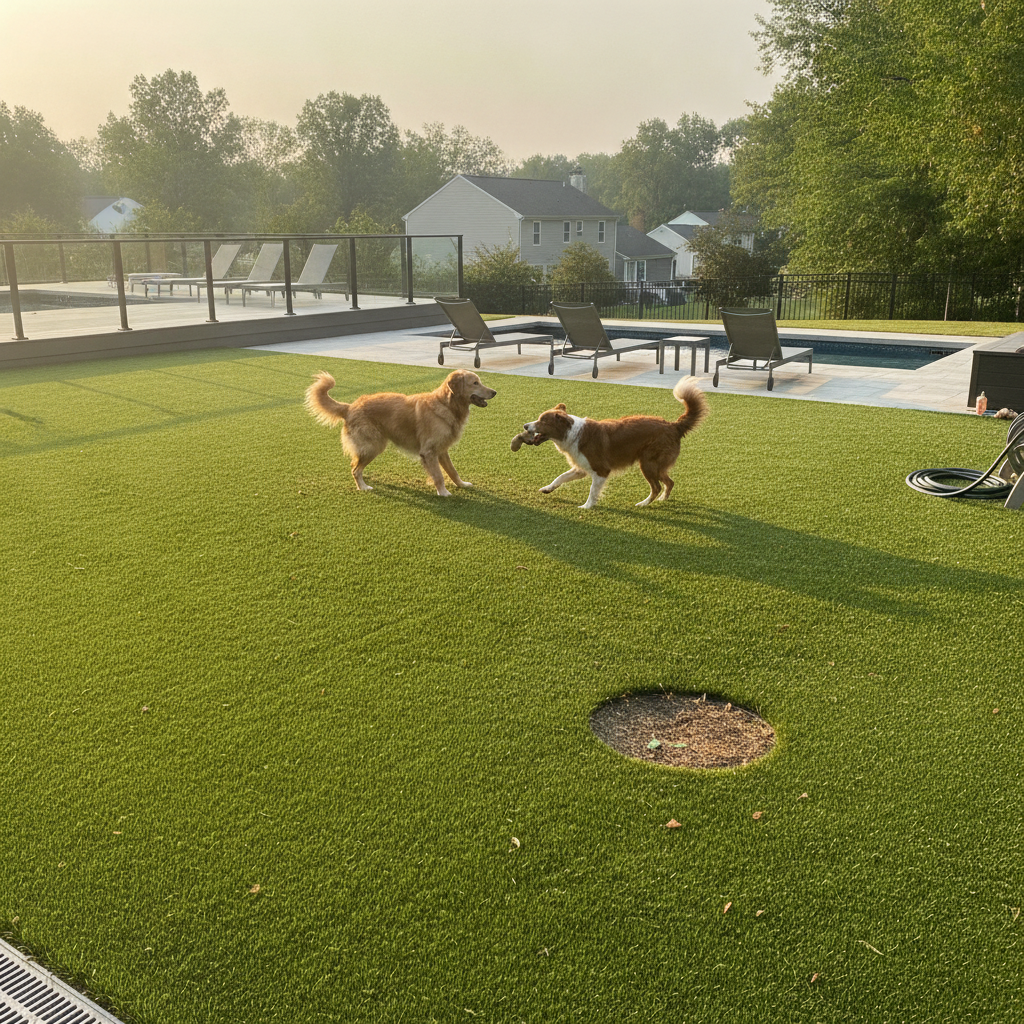
What’s the Difference Between Pet Turf and Regular Artificial Grass in Burke, VA? A Side-by-Side Breakdown for Dog Owners
If you’re a dog owner in Burke, VA looking into artificial grass, here’s the short answer: yes, there is a meaningful difference between pet-specific turf systems and standard residential artificial grass — and installing the wrong one can cost you significantly more in the long run than just getting it right the first time. Pet turf isn’t a marketing upsell. It’s a fundamentally different product engineered around a specific set of biological realities: urine volume, bacteria growth, odor retention, and heavy-paw traffic. This breakdown will show you exactly where the two products diverge, what specs to look for, and why those differences matter specifically in a humid, HOA-dense community like Burke.
The Core Problem Regular Artificial Grass Can’t Solve
Standard residential turf — the kind you’d install for a clean, low-maintenance lawn — is built to handle foot traffic, rain, and sun. Its drainage system is engineered around precipitation: water that hits the surface and flows down through the backing and into a gravel base. That works perfectly well for a lawn. It does not work for concentrated pet waste.
Dog urine is not rain. It hits the same spots repeatedly — dogs are creatures of habit — and it contains urea, ammonia, and bacteria that accumulate in the infill layer over time. A standard crumb rubber or sand infill doesn’t break those compounds down. It just traps them. On a warm July afternoon in Fairfax County, when temperatures spike into the mid-90s and humidity sits at 80 percent, that trapped bacteria activates fast. Within a few weeks of consistent dog use, a standard turf installation can develop a persistent odor that no amount of hosing down will fix.
That’s not a cleaning problem. It’s a system design problem — and it’s one that competitors in the Northern Virginia market frequently underexplain to homeowners shopping on price alone.
What Actually Makes Pet Turf Different: A Layer-by-Layer Comparison
Drainage Rate
Standard residential turf typically drains at 30–60 inches per hour, which is more than enough for rainfall. Pet turf systems — properly engineered ones — drain at 400 inches per hour or faster. That’s not a marginal improvement. It’s a completely different drainage architecture, usually achieved through a perforated or flow-through backing design rather than the coated backing found on landscape turf. The goal is to push liquid through the system immediately rather than allowing it to pool in the infill, where bacteria thrives.
Infill Composition
This is where the biggest performance gap lives. Standard turf uses silica sand, crumb rubber, or a basic polymer infill. Pet-specific systems add two critical layers that standard turf simply doesn’t include:
- Zeolite deodorizer layer: A volcanic mineral that actively absorbs ammonia ions at the molecular level. It doesn’t just mask odor — it traps the compound that causes it. In the humid DMV summers, this is non-negotiable for any dog that uses the turf regularly.
- Antimicrobial infill: A bacteriostatic agent worked into the infill that prevents bacteria colonies from establishing in the base layer. Without this, even a high-drainage system will develop bacterial buildup over a single summer season.
Fiber Density and Pile Characteristics
Pet turf typically uses a lower pile height — around 30–38mm — with higher blade density. This is intentional. Denser, shorter blades drain faster and give paws better traction, but more importantly, they make it easier to rinse waste completely through the backing without it catching on long fibers. Standard landscape turf in the 40–50mm range looks lush and natural but holds moisture and waste higher in the pile, which works against odor control.
Backing Material
Pet turf uses a dual-layer urethane or latex backing with punctured drainage holes at a high density — sometimes 40+ holes per square foot. Standard residential backing may have fewer perforations or a fully coated construction that’s designed to prevent water intrusion from below rather than encourage drainage from above. If you’re looking at a product and the spec sheet doesn’t list a drainage rate or backing hole density, that’s a red flag for a pet application.
Why This Matters More in Burke Than It Might Elsewhere
Burke, VA sits in a climate band that creates specific challenges for turf-and-pet combinations. You’re dealing with:
- Heavy spring rains that saturate base material if drainage isn’t engineered correctly from the ground up
- Hot, humid summers where bacterial activation in the infill layer happens fast
- Freeze-thaw winter cycles that stress base compaction, which matters for drainage consistency year-round
- A high density of HOA-governed neighborhoods where odor complaints from neighbors can become a real issue
Communities across Burke Centre, Signal Hill, and Rolling Valley are tightly laid out. If your pet turf system isn’t performing on odor control, you’re going to hear about it — from your HOA, if not your neighbors directly. A well-built pet-friendly turf installation with a proper zeolite layer and high-flow backing isn’t just about your dog’s comfort. It’s about protecting your use of the space long-term.
What Standard Artificial Grass Is Still Good For
To be fair to the product: standard residential turf is excellent for what it’s designed to do. If you have a dog that uses one small corner of a larger lawn, a standard turf system on the majority of your yard with a dedicated pet zone on high-drainage turf in one section can make a lot of financial sense. Not every square foot needs the full pet-system treatment.
Standard landscape turf also tends to offer more pile height options and aesthetic variety for front yards and visible areas where curb appeal matters. If your HOA in Fairfax County requires a specific blade color or height profile for front-facing installations, you’ll have more product options in the standard turf category. For most residential lawn areas that see light-to-moderate dog activity, a quality residential lawn turf installation with proper base drainage will still outperform natural grass in every maintenance category.
What the Cost Difference Actually Looks Like
Pet-specific turf systems typically run $2–$5 per square foot more than standard residential turf, when you account for the specialized infill, higher-flow backing, and the additional base prep required to ensure the drainage system performs correctly. For a 500-square-foot dog run or backyard, that’s a total difference of roughly $1,000–$2,500 depending on scope and site conditions.
That sounds like a meaningful premium until you consider the alternative: reinstalling a standard turf system that’s become odor-saturated within 18 months, or adding expensive post-installation deodorizing treatments that treat the symptom rather than the cause. Done right the first time, a purpose-built pet turf system in a Northern Virginia climate should deliver 15+ years of odor-controlled, low-maintenance performance with basic rinsing maintenance.
Questions to Ask Any Installer Before You Commit
Whether you’re in Springfield, Fairfax, or Burke, don’t let any installer sell you a pet turf system without getting clear answers to these questions:
- What is the drainage rate of this backing, and how is it tested?
- Does the infill system include a zeolite layer, and how thick is it?
- Is there an antimicrobial component in the infill, and is it factory-integrated or applied on-site?
- What is the warranty on odor performance, and what does it actually cover?
- How does your base prep account for Northern Virginia’s freeze-thaw cycles?
Any installer who can’t answer these questions specifically — not generally — is selling you a product they don’t fully understand. The technical specs on pet turf are not optional details. They are the product.
Frequently Asked Questions
Can I use regular artificial grass if I only have one small dog?
For very light use — a small dog, occasional outdoor time — you might get away with standard turf, especially if the area has excellent natural drainage. But once you’re dealing with daily use and repeated bathroom spots, even a small dog creates enough cumulative urea buildup to cause odor issues within a few months in the DMV’s summer heat. Pet-specific infill is worth it for any consistent dog use.
Does pet turf look different from regular artificial grass?
Mostly no. The primary visual difference is that pet turf often has a slightly shorter pile height (30–38mm vs. 40–50mm), which some homeowners prefer anyway for a neater, more manicured look. The backing differences and infill composition are invisible once installed. You’re not sacrificing aesthetics for function.
Will my HOA in Burke or Fairfax County approve pet turf specifically?
HOA approval is based on the appearance of the finished surface, not the technical composition beneath it. As long as the turf color and blade height meet your HOA’s aesthetic guidelines, the fact that it’s a pet-rated system typically doesn’t affect approval. Always get architectural review approval before installation regardless of product type.
How do I maintain pet turf to keep the odor guarantee valid?
Most pet turf warranties require periodic rinsing of the pet use area (typically weekly during active use periods), occasional brushing to keep infill distributed, and an annual enzyme-based deep cleaning. Grassify includes a 90-day odor-free guarantee on pet turf installations and provides a maintenance guide at project closeout.
What if my dog digs or scratches at the turf?
Pet turf uses the same UV-stabilized polyethylene or polypropylene fiber as standard turf, secured to a urethane-backed system. Moderate scratching won’t damage the surface. Persistent diggers can be accommodated with a reinforced base edge or dig-guard barrier around the perimeter — something worth discussing during your site assessment if you have a known digger.
Ready to Get It Right the First Time?
If you’re a dog owner in Burke, Springfield, or anywhere across Fairfax County who’s been putting off this decision because the options felt confusing, you’re not alone. The pet turf vs. standard turf question is one of the most common things we walk homeowners through before any installation begins. The answer is almost always the same: if your dog is using it regularly, build the system for the dog.
Grassify installs purpose-built pet turf systems across Northern Virginia with licensed, background-checked crews and a lifetime warranty on seams, edges, and base work. We know what Burke’s summers and winters do to base material, and we engineer accordingly. Request a free consultation and we’ll walk you through exactly what your yard needs — no pressure, no guesswork, and no overselling on square footage you don’t need.


